

 English
 中文简体
 русский
 Français
 عربى
 Español
Industry News
AC Condensate Drain: Pans, Lines, Traps, and Maintenance Guide for HVAC
A stained ceiling tile under an air handler usually tells the same story: the cooling coil did its job, but the AC condensate drain did not. Water was captured in the pan, then failed to leave the unit in a controlled way. The result can be a wet filter, a rusted cabinet, a tripped float switch, or damage to the building envelope.
The practical conclusion is simple: treat the drain as a system, not a pipe. The pan, trap, slope, discharge point, and maintenance routine all have to work together. This guide covers the drain path, common failures, material choices, and OEM buying checks.
Content
- 1 What an AC Condensate Drain Actually Does
- 2 Where AC Condensate Drain Problems Start
- 3 Pan and Drain Material Selection
- 4 Installation Details That Prevent Callbacks
- 5 Maintenance Cadence and Field Checks
- 6 Specifying AC Condensate Drain Parts for OEM Projects
- 7 Common Questions About AC Condensate Drains
What an AC Condensate Drain Actually Does
During cooling, the indoor coil runs below the dew point. Moisture from the return air condenses on the fins and drips into a primary drain pan. From there, the condensate drain line carries water to an approved discharge point. A trap prevents air from being pulled through the line, while a continuous slope keeps water moving toward the outlet.
There are two separate failure modes. First, the pan may not capture water because it is undersized, misaligned, cracked, or corroded. Second, the pan may capture water but the line may not remove it because of a clog, a dry trap, a negative-pressure problem, or a slope that runs uphill. A secondary pan and float switch are backup measures; they are not substitutes for a working primary drain.
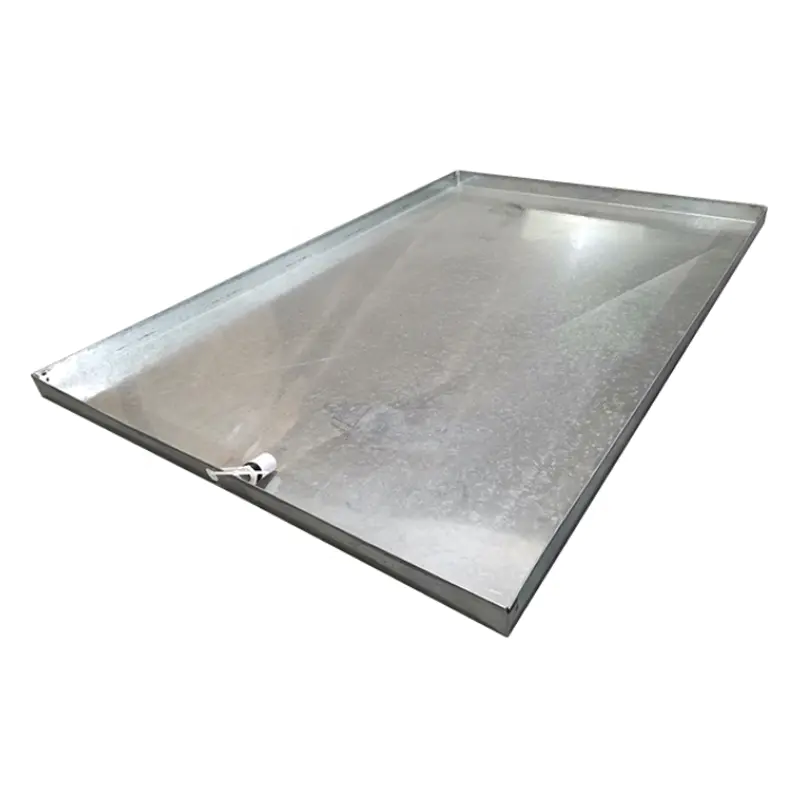
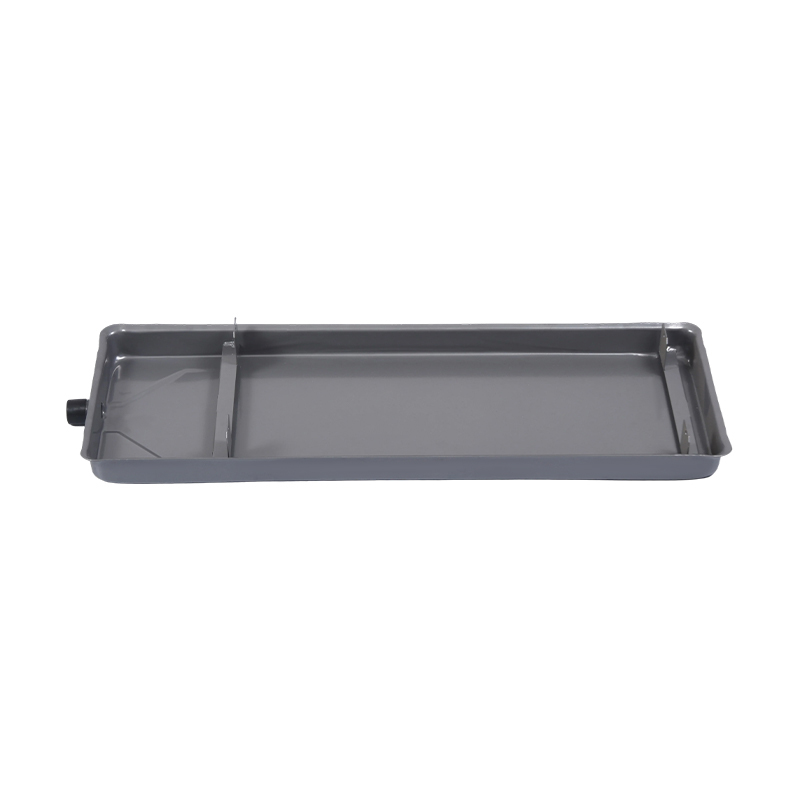 Custom AC Condensate Drain PansCustomizable galvanized or aluminum trays with adjustable size, shape, and drain outlet for matching unit layout and supporting reliable condensate collection.View Product →
Discharge details matter as much as the parts. Industry inspection guidance notes that condensate drains should not be directly connected to plumbing drain, waste, or vent piping, and local mechanical codes govern the approved method. In many projects, that means an indirect discharge to a floor drain, receptor, or exterior point where water can be seen and managed. Review our AC drain pan options when matching pan size and outlet position to the unit.
Where AC Condensate Drain Problems Start
Most callbacks begin with a small symptom that is easy to ignore: a few drops under the unit, a musty smell at startup, or a float switch that trips only on humid days. The table below is a field-friendly starting point. It is based on common HVAC service practice and should be used with the unit manufacturer's installation manual.
| Symptom | Likely cause | First check | Corrective action |
|---|---|---|---|
| Water stains near the air handler | Overflow from a blocked pan outlet or clogged line | Pan level, outlet, and trap | Clear the blockage, restore slope, and verify the float switch |
| Musty odor at startup | Standing water, biofilm, or a wet secondary pan | Pan slope and drain trap | Clean the pan and line, correct ponding, and dry the area |
| Unit shuts down on humid days | Float switch lifting because water cannot leave | Float position and drain flow | Clear the line, check trap depth, and confirm discharge |
| Rust or coating loss in the pan | Material not suited to the water chemistry or environment | Pan surface and welds | Replace with a suitable stainless, galvanized, or coated pan |
| Gurgling or air noise at the drain | Missing trap, dry trap, or direct air path | Trap water seal | Refill or install a properly sized trap with a cleanout |
Pan and Drain Material Selection
Material choice is not just a price decision. A pan that performs well in a dry inland mechanical room may fail quickly in a coastal install, a kitchen exhaust environment, or a system with aggressive condensate. Start with the water chemistry, cleaning chemicals, ambient humidity, and the manufacturer's specification. Then compare the realistic options.
| Material | Typical use | Watch-outs | Corrosion resistance |
|---|---|---|---|
| 304 stainless steel | Long-life pans, visible installations, humid rooms | Confirm weld quality and passivation | High in most indoor condensate service |
| 316 stainless steel | Coastal, industrial, or chloride-bearing environments | Higher cost; specify finish and thickness | Very high |
| Galvanized steel | Cost-sensitive HVAC pans and housings | Cut edges and scratches need protection | Moderate; depends on coating integrity |
| Cold-rolled steel | Coated or painted internal parts | Corrosion risk if coating is damaged | Low without a coating |
| Aluminum | Lightweight trays and custom shapes | Check compatibility with cleaners and dissimilar metals | Moderate; varies by alloy |
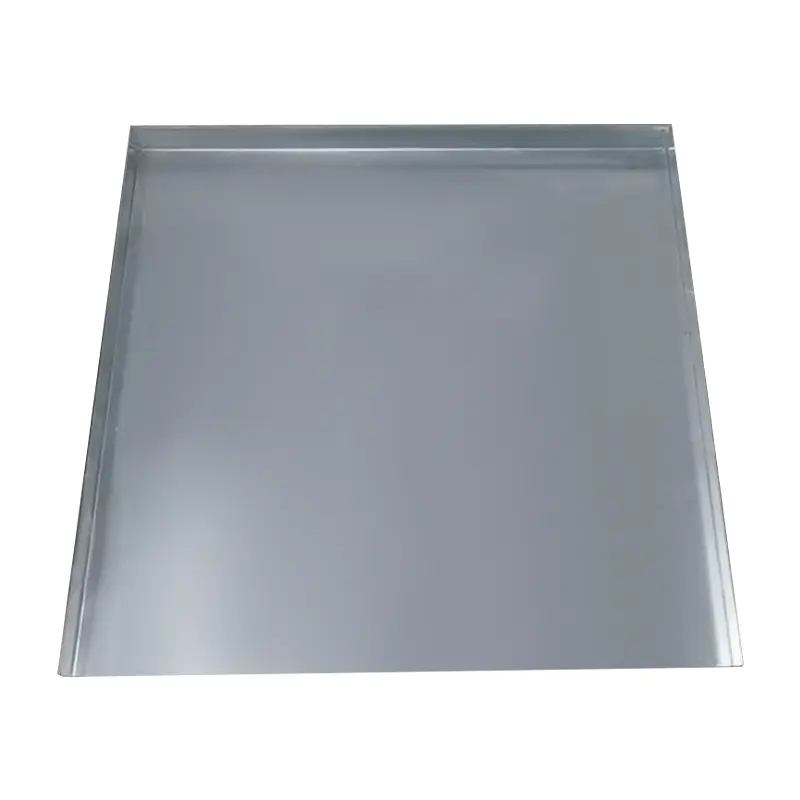
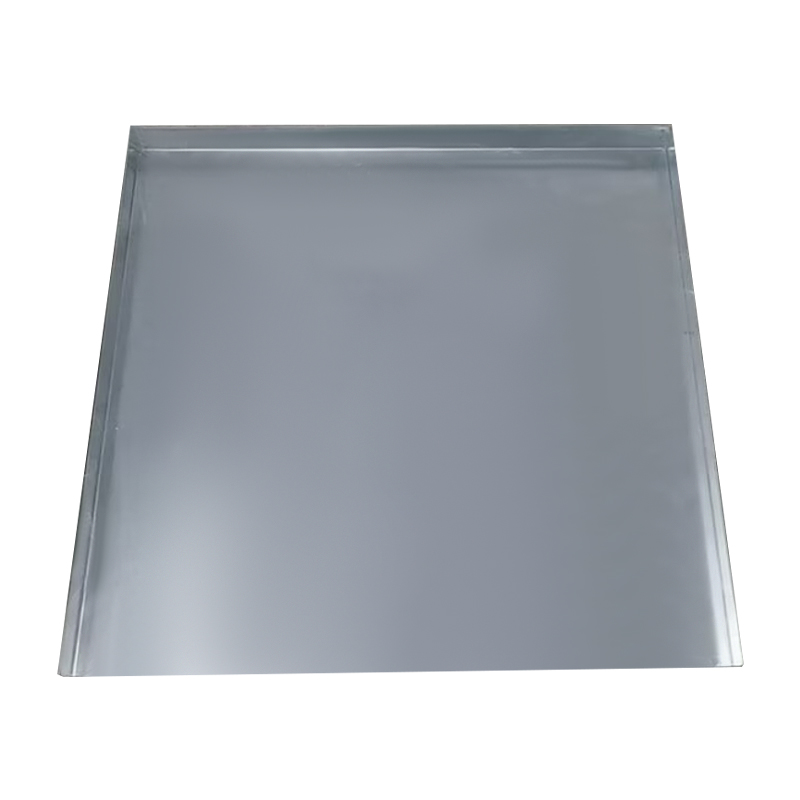 Galvanized Steel HVAC Condensate Drain PansSquare galvanized-steel pans with optional coating and insulation, customizable for central AC, HVAC, commercial, industrial, and residential condensate drainage.View Product →
For buyers sourcing these parts, Cixi Chenfeng Electric Co., Ltd. is a professional air conditioner parts manufacturer and sheet metal parts factory focused on central air conditioning accessories. The company states that it occupies an important position in the central air conditioning accessories industry and produces water trays, brackets, and custom sheet metal parts with precision manufacturing and strict quality control. Its product range fits projects that need standard or custom HVAC hardware rather than a single catalog item.
When comparing quotes, ask for material grade, sheet thickness, drain connection size, slope direction, mounting points, coating specification, and leak-test method. Those details affect installation time and long-term service more than a small unit-price difference. Our HVAC system components overview is a useful starting point for matching pans, brackets, and indoor-unit parts.
Installation Details That Prevent Callbacks
A drain that works on the bench can fail in the air handler because installation changes the physics. The pan must sit level or slope toward the outlet as the manual requires. The line should fall continuously toward discharge; a common field rule is 1/8 in. per ft, but the manufacturer's manual and local code take precedence. Avoid long horizontal runs, sharp elbows, and low spots where water can sit.
The trap needs a water seal deep enough to overcome cabinet pressure, plus a cleanout for service. In freezing climates, protect the trap and exposed line from ice formation. A secondary pan should cover the footprint of the unit and piped connections, and its float switch should be wired to stop the unit before water reaches the ceiling or floor. The discharge point must be visible and safe, not directed onto a walkway, foundation, or electrical equipment.
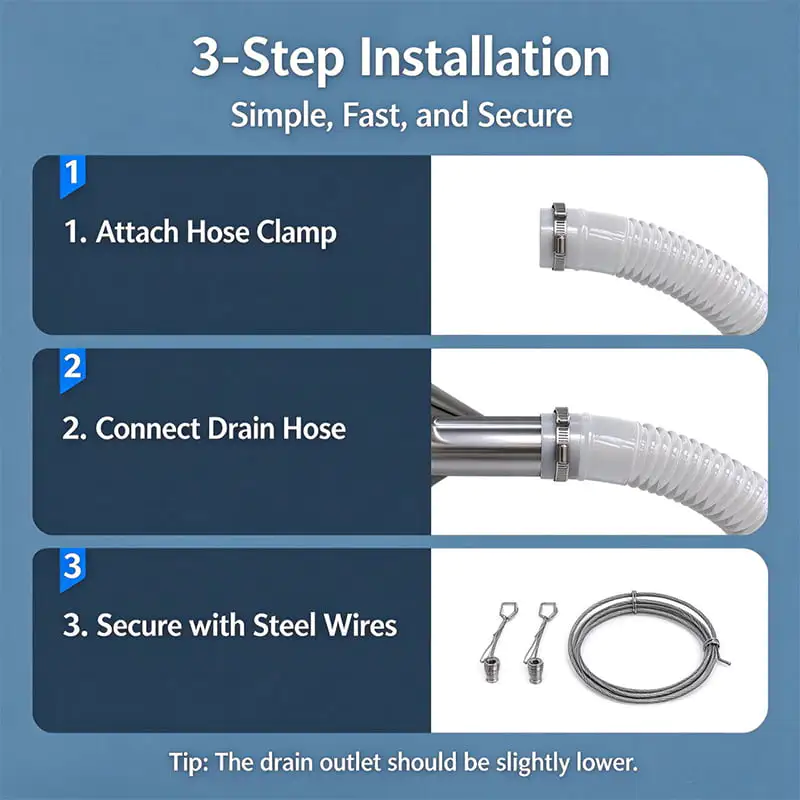 Stainless steel water collection trayThe Stainless Steel Water Collection Tray is a high-performance liquid collection and drainage component designed for precise condensate collection, water diversion, a...View Product →
For humid ceilings, coastal sites, or projects with long service intervals, a stainless tray and a corrosion-resistant fastening package are often worth the upgrade. The pan should be accessible enough for inspection, and the outlet should be sized for the expected condensate load with a margin for biofilm and debris.
Maintenance Cadence and Field Checks
Condensate drains do not fail on a convenient schedule. They fail when biofilm, dust, insulation fibers, or mineral scale narrow the outlet during a high-load week. A simple routine prevents most of that risk. The chart below shows a practical baseline cadence; adjust it for climate, occupancy, filter condition, and manufacturer guidance.
At each check, confirm that the pan drains completely and that the trap holds water. Look for rust, cracked plastic, loose float switches, and water stains on insulation. Flush the line with clean water and use a wet/dry vacuum at the service port when accessible. Avoid mixing cleaning chemicals, and never use a drain chemical that is incompatible with the pan material or local wastewater rules.
- Check the primary pan for standing water and slope.
- Test the float switch by lifting it and confirming shutdown.
- Verify that the discharge point is visible and not blocked.
- Replace damaged insulation before it becomes a debris source.
Specifying AC Condensate Drain Parts for OEM Projects
For an OEM or custom sheet metal project, a clear drawing package reduces rework. Specify the pan outline, depth, outlet diameter, outlet position, mounting holes, material grade, sheet thickness, surface finish, and acceptable tolerances. State the leak-test method and packaging requirements, especially if the parts will be painted or shipped overseas.
Ask for a first-article inspection report, material certificates, and photos of the drain connection and welds. For humid or coastal markets, request a corrosion-resistant finish and confirm that fasteners are compatible with the pan material. If the project includes brackets, vibration pads, or indoor-unit parts, group the parts into one approval cycle to avoid fit issues at assembly.
The lowest-cost pan is rarely the lowest-cost installation. A pan that arrives with the wrong outlet position or a shallow slope can cost more in field labor than the part itself. Use a sample install and a water test before full production, and keep the approved drawing as the reference for future orders.
Common Questions About AC Condensate Drains
Q1. How often should I flush an AC condensate drain line?
A1. A visual check monthly and a water flush quarterly is a practical baseline. In dusty or high-humidity sites, check more often.
Q2. Why is water leaking from my indoor unit?
A2. The most common causes are a clogged line, a blocked pan outlet, a dry trap, or a pan that no longer slopes toward the drain.
Q3. Can I use bleach in the condensate drain?
A3. Some service guides allow diluted bleach, but it can damage pans, seals, and downstream surfaces. Follow the manufacturer and local rules, or use water and a suitable HVAC drain cleaner.
Q4. What is the difference between a drain pan and a drain line?
A4. The pan captures condensate at the coil. The drain line carries it to an approved discharge point. Both must work together.
Q5. Should I choose stainless steel or galvanized steel?
A5. Stainless steel is better for humid, coastal, or long-life applications. Galvanized steel is cost-effective when the coating stays intact and the environment is moderate.
Q6. What does a float switch do?
A6. It detects high water in the secondary pan or drain path and stops the unit before overflow causes property damage.
-
Galvanized Steel Condensate Collection Pans for Ai...
-
Our Rubber Vibration Isolator Pads for HVAC System...
-
Galvanized Steel AC Drain Pans are specially desig...
-
Our Black Plastic Meat Trays for Fresh and Frozen ...
-
Custom Square Aluminum & Stainless Steel Drain...
-
Detailed Description: Featuring a light brown open...


Contact info.
+86 17398066504 [email protected]
+86 17398066504
[email protected]
 +86-0574-63301198
 +86-13706742730
 No. 939, Qiye Road, Zhouxiang Town, Cixi City, Ningbo City, Zhejiang Province, China
Hot Products
Stainless Steel Equipment & Folding BBQ Grill Series Air Conditioner Drain Pan And Outdoor Unit Bracket Ventilation FansGet A Free Quote
Copyright © 2025 by Cixi Chenfeng Electric Co., Ltd All Rights Reserved. Air Conditioner Parts Manufacturers Stainless Steel Sheet Metal Parts Factory
