

 English
  中文简体
中文简体  русский
  Français
  عربى
عربى  Español
Industry News
Where Is the Drain Pan on an Air Conditioner? How to Find and Inspect It
You walk into a closet or attic, lift the access panel on the air conditioner's indoor unit, and find a shallow tray holding a few inches of water. That tray is the condensate drain pan. Its job is to catch the water that drips off the evaporator coil and send it safely down a drain line.
The short answer to “where is drain pan on air conditioner?” is: the primary drain pan sits directly beneath the evaporator coil inside the indoor air handler, furnace cabinet, or horizontal ceiling unit. Some systems also have a secondary overflow pan under the whole unit. Knowing how to find it can help you spot a clog, a crack, or a missing pan before water damages your home.
Content
- 1 Where the Drain Pan Is Located in a Split-System Air Conditioner
- 2 Primary Drain Pan vs. Secondary Overflow Pan
- 3 How to Find the Drain Pan in Common Installations
- 4 Why Drain Pan Location Matters for Inspection and Replacement
- 5 Choosing a Replacement Drain Pan That Lasts
- 6 Frequently Asked Questions About AC Drain Pan Location
Where the Drain Pan Is Located in a Split-System Air Conditioner
A split-system air conditioner has an outdoor condenser and an indoor evaporator unit. In the indoor unit, a blower pulls warm air over the cold evaporator coil. The coil removes heat and moisture from the air, and that moisture turns into condensation. The condensation runs down the coil and falls into a pan.
In a typical vertical air handler, the drain pan is located just below the coil, near the top of the blower compartment. In a horizontal attic unit, the pan is still under the coil, but the entire cabinet is laid on its side, so the pan runs along the low side of the coil. In both cases, the pan has a drain fitting connected to a condensate line.
The diagram shows the main parts in a simplified isometric view: the air handler cabinet, the evaporator coil, the primary drain pan below it, and the condensate line leaving the pan. If the unit is installed horizontally, a larger secondary pan often sits underneath the entire cabinet to catch overflow.
Primary Drain Pan vs. Secondary Overflow Pan
You may see one pan or two, depending on the installation. The primary pan is always under the coil because it handles normal condensate. The secondary pan is a safety device. If the primary drain line clogs, water backs up and overflows the primary pan. The secondary pan catches that overflow and directs it to a separate drain or an alarm float switch.
| Feature | Primary drain pan | Secondary overflow pan |
|---|---|---|
| Location | Directly below the evaporator coil | Underneath the entire indoor air handler |
| Purpose | Collects normal condensation and guides it to the drain line | Catches overflow if the primary drain line becomes clogged |
| Common in | Most split-system indoor units | Horizontal attic units and units above finished living spaces |
| Maintenance concern | Algae, dirt, and clogged drain fittings | Rust, cracks, and an unused drain connection |
Horizontal installations in attics are more likely to have a secondary pan because a leak over a finished ceiling causes far more damage than a basement leak. In some areas, building codes require an overflow pan under a horizontal air handler.
How to Find the Drain Pan in Common Installations
Use these steps to locate the pan safely.
- Turn off the air conditioner at the thermostat and switch off the indoor unit's power at the breaker or the furnace disconnect.
- Open the access panel. On a furnace or air handler, the panel is usually held by two or four screws.
- Find the evaporator coil, identified by aluminum fins and copper tubing. In a vertical unit, it sits above the blower.
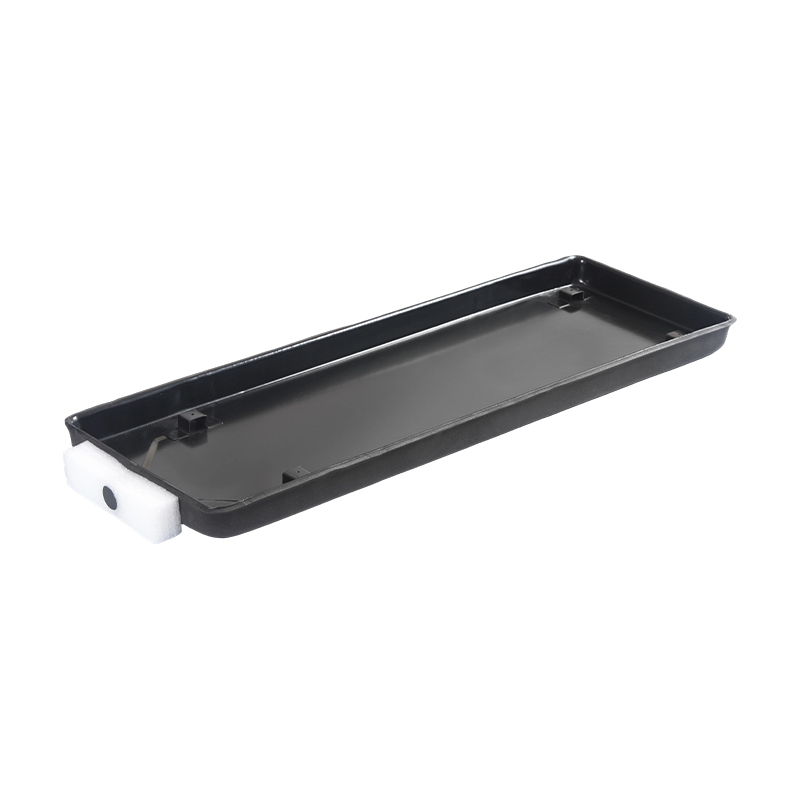
- Look for a tray underneath the coil. The tray is usually metal or plastic, with a drain fitting at one end.
- Trace the condensate line from the tray to a floor drain, a pump, or the outside of the house.
- If the unit is horizontal, look beneath the entire cabinet for a second pan. It may be wider than the unit and have its own drain.
Mini-split and ceiling cassette units
For ductless mini-splits, the drain pan is inside the indoor wall unit, just below the coil behind the front panel. Ceiling cassettes have a hidden condensate tray around the edge of the coil. These units require removing the cover for inspection, and they often include a small drain pump to push water up to a drain line.
Why Drain Pan Location Matters for Inspection and Replacement
If you can find the pan, you can inspect the two most common failure points: the pan itself and the drain connection. The pan should be level or slightly tilted toward the drain fitting. A sagging or cracked pan leaves standing water, which can cause mildew and insects. A blocked drain line makes the pan overflow even when the pan is structurally sound.
Most manufacturers recommend cleaning the drain pan and line at least once a year, but homes with pets, dust, or high humidity need more frequent checks. The chart below shows a practical preventive schedule.
Rust and cracks are the main reasons pans fail in metal units. Plastic pans resist corrosion but can become brittle. Stainless steel and galvanized steel pans last longer in high moisture, but only if the coating or alloy matches the environment.
Choosing a Replacement Drain Pan That Lasts
When replacing a pan, measure the length, width, and height of the original pan, and check the location of the drain fitting. A pan that is too small will not catch dripping water from the coil. A pan with the wrong slope, or no slope, will not drain completely.
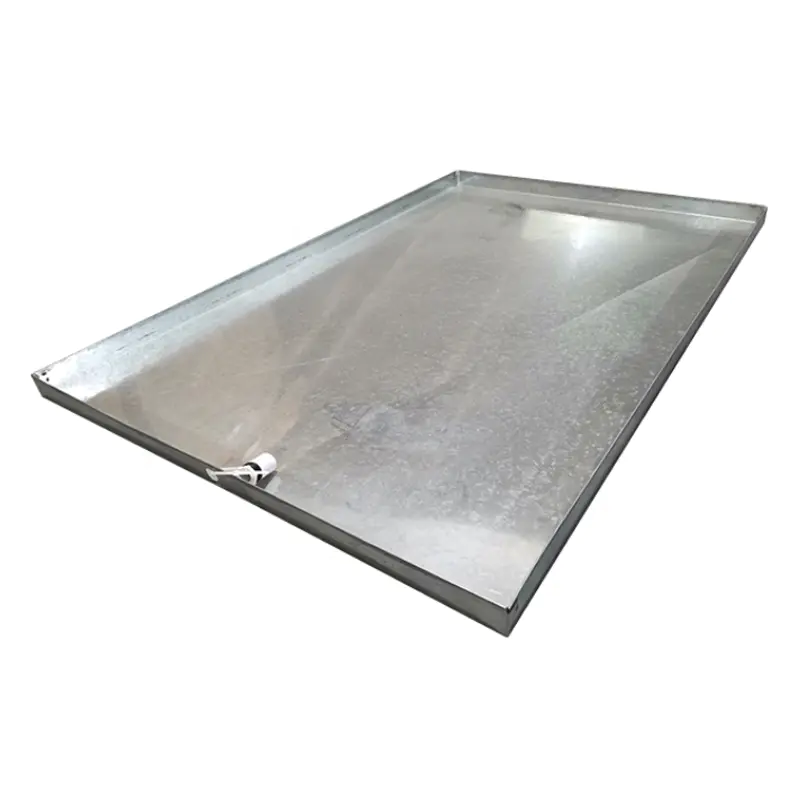
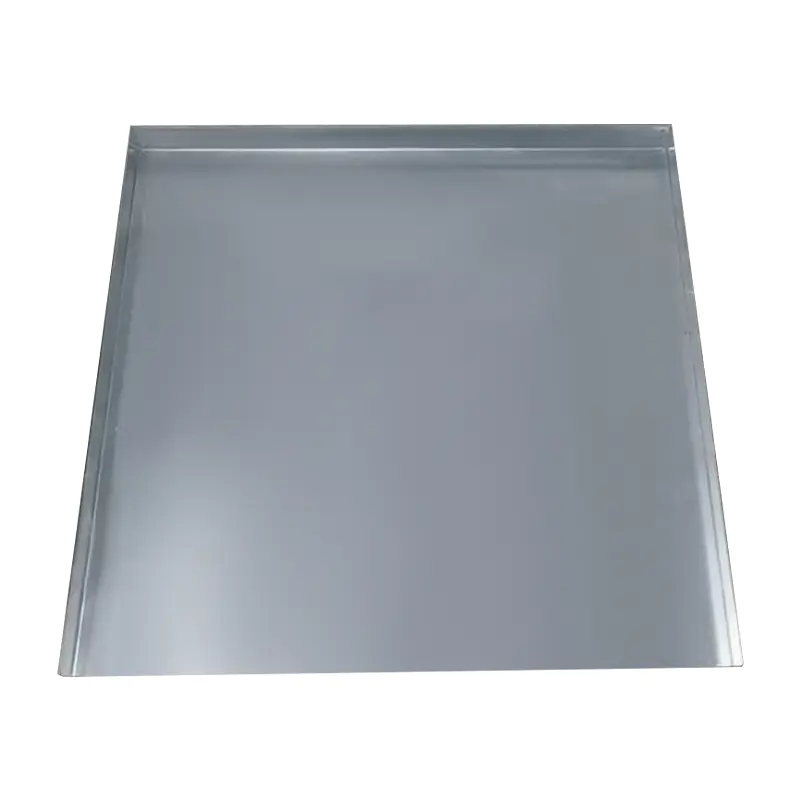
For metal drain pans, the common choices are galvanized steel, aluminum, and stainless steel. Galvanized steel is strong and budget-friendly.
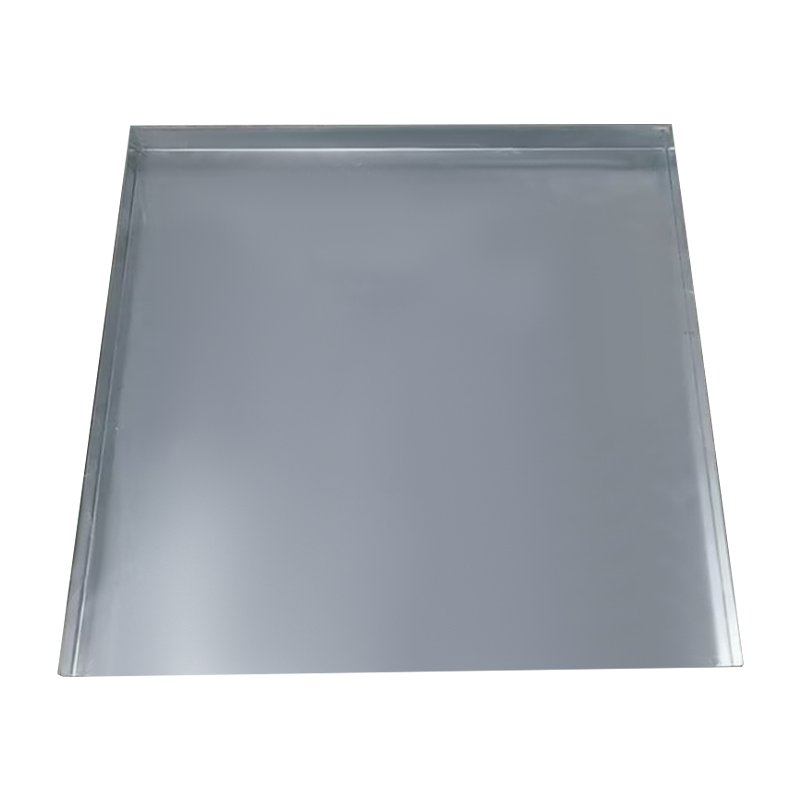 Galvanized Steel AC Drain Pan for HVAC SystemsThis square galvanized steel drain pan collects condensate efficiently and resists corrosion, making it a durable, budget-friendly option for air conditioning and ventilation equipment.View Product →
Stainless steel is more expensive but resists corrosion and is easier to clean. Aluminum is lightweight and resists corrosion in many climates, though it dents more easily.
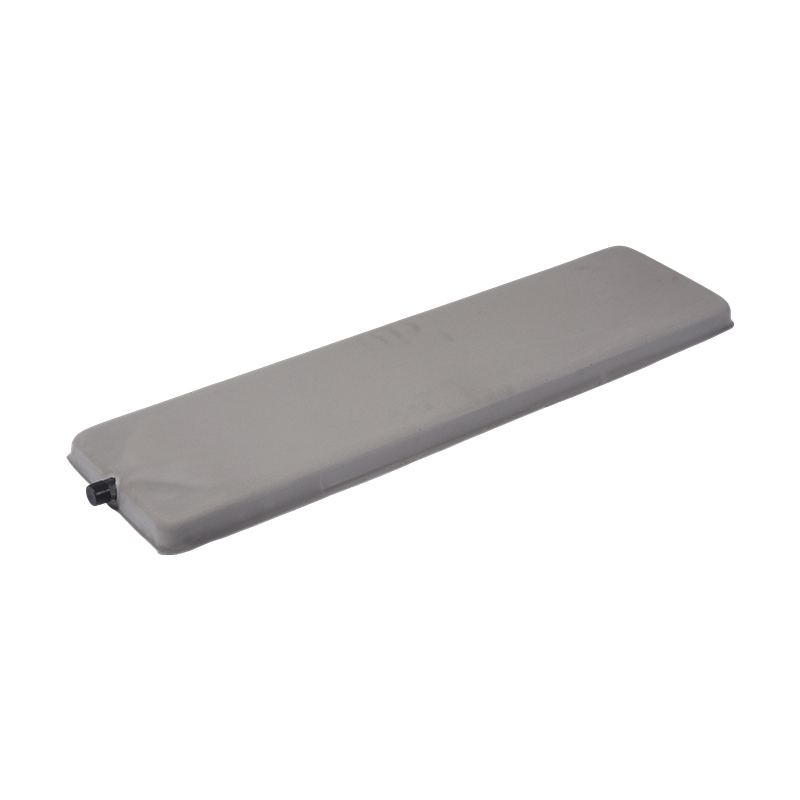 Stainless Steel Water Collection Tray with Custom OptionsThis corrosion-resistant stainless steel tray suits demanding HVAC or industrial settings, offering smooth drainage and customization, while the passage also notes its easier cleaning compared with other metals.View Product →
At Cixi Chenfeng Electric Co., Ltd., we are a professional enterprise in the electrical field, focusing on the development and production of central air conditioning accessories. We are a professional air conditioner parts manufacturer and sheet metal parts factory. With excellent technical strength, reliable product quality and good market reputation, the company occupies an important position in the central air conditioning accessories industry. We specialize in the production of air conditioning accessories and other custom sheet metal parts, including brackets, water trays, etc., with precision manufacturing and strict quality control, we provide solid quality assurance for air conditioning systems.
If you work with OEM orders or need a dedicated drain pan for a custom HVAC project, it helps to partner with a factory that controls punching, forming, welding, and finishing in-house. Our factory overview shows the production equipment and quality checks behind our sheet metal parts. We also offer custom sizes and materials so the pan matches the original design, not just a generic replacement.
Read more about what an HVAC drain pan does and why it is so critical if you want to understand the function before buying. See how our factory manufactures drain pans and other sheet metal parts.
Frequently Asked Questions About AC Drain Pan Location
Q1: Can a cracked drain pan be repaired?
A: Small cracks can be sealed temporarily with epoxy or silicone, but a replacement is safer because the pan flexes under water weight.
Q2: Why is there water in the drain pan after the unit is off?
A: Condensation can continue for a few minutes after shutdown; if water stays for hours, check the drain line for a clog.
Q3: Do all air conditioners have a secondary overflow pan?
A: No, secondary pans are typically installed on horizontal units above living spaces or where local code requires them.
Q4: How can I tell if the drain pan is level?
A: Pour a small amount of water into the pan; it should flow toward the drain fitting without pooling on the opposite side.
-
The Air Conditioner L Mounting Bracket is a profes...
-
Galvanized Steel Condensate Collection Pans for Ai...
-
The air conditioner condensate tray is a critical ...
-
Galvanized Steel AC Drain Pans are specially desig...
-
Custom Square Aluminum & Stainless Steel Drain...
-
The Air Conditioner Drip Tray (HVAC Condensate Dra...

Contact info.
+86 15967843486 [email protected]
+86 15967843486
[email protected]
[email protected]
+86 15967843486
[email protected]
 +86-0574-63301198
 +86-13706742730
 No. 939, Qiye Road, Zhouxiang Town, Cixi City, Ningbo City, Zhejiang Province, China
Get A Free Quote
Copyright © 2025 by Cixi Chenfeng Electric Co., Ltd All Rights Reserved. Air Conditioner Parts Manufacturers Stainless Steel Sheet Metal Parts Factory
