

 English
  中文简体
中文简体  русский
  Français
  عربى
عربى  Español
Industry News
Air Conditioner Drain Pans: Complete Guide for HVAC Buyers
Content
- 1 What an Air Conditioner Drain Pan Actually Does
- 2 How an AC Drain Pan Works Inside the System
- 3 Drain Pan Material Options: Stainless Steel, Galvanized Steel, and Aluminum
- 4 Comparing Stainless Steel and Galvanized Steel Drain Pans
- 5 Common Causes of AC Drain Pan Overflow
- 6 Where the Drain Pan Sits Inside the AC Unit
- 7 Drain Pan Sizing and Dimensions
- 8 Maintenance Schedule for an HVAC Condensate Pan
- 9 Sourcing an HVAC Drain Pan Manufacturer
- 10 Frequently Asked Questions
- 10.1 What is an air conditioner drain pan
- 10.2 What does an HVAC drain pan do
- 10.3 What is a condensate drain pan
- 10.4 Where is the drain pan on an air conditioner
- 10.5 How does an AC drain pan work
- 10.6 What is the difference between a drain pan and a condensate pan
- 10.7 Why is my AC drain pan full of water
- 10.8 Why is my HVAC drain pan overflowing
- 10.9 Why is my air conditioner drain pan leaking
- 10.10 Why does my AC drain pan keep filling up
What an Air Conditioner Drain Pan Actually Does
An air conditioner drain pan collects the condensate water that forms on the evaporator coil during the cooling cycle and channels it toward a drain line, keeping moisture away from ductwork, insulation, and surrounding structural material. Without a properly fitted pan, condensate would simply run off the coil and pool inside the air handler cabinet or drip into the space below the unit.
Most residential and light commercial systems use two pans working together: a primary pan mounted directly beneath the evaporator coil, and a secondary pan installed under the entire air handler as a backup catch basin. This dual layout is standard practice across attic and closet installations, since it gives a second line of defense if the primary drain line becomes restricted.
Whether the component is described as an HVAC drain pan, a condensate pan, or an air conditioning drain pan, the function stays the same across brands and system sizes: manage condensate so it leaves the system in a controlled path rather than an uncontrolled one.
How an AC Drain Pan Works Inside the System
As warm indoor air passes across the cold evaporator coil, moisture in the air condenses on the coil surface, similar to water forming on a cold glass. That water drips downward and lands in the pan positioned directly beneath the coil. The pan is manufactured with a slight slope toward one corner or edge, where a drain outlet connects to a PVC or copper drain line that carries the water away from the unit, typically to a floor drain, condensate pump, or exterior discharge point.
Primary vs Secondary Drain Pan Roles
The primary pan sits closest to the coil and handles condensate under normal operating conditions. The secondary pan, sometimes called an emergency or auxiliary pan, is positioned beneath the full air handler footprint and only collects water if the primary pan overflows or the main drain line clogs. Many secondary pans include a float switch that shuts the system down automatically when water is detected, which limits how much water can accumulate before someone notices the issue.
Why Slope and Outlet Position Matter
A pan with insufficient slope allows water to sit rather than drain, which increases the chance of standing water, sediment buildup, and microbial growth over time. This is one reason manufacturers pay close attention to outlet placement and pan geometry rather than treating the pan as a simple flat tray.
Drain Pan Material Options: Stainless Steel, Galvanized Steel, and Aluminum
Material selection affects how a pan holds up against moisture exposure over years of continuous use. The three materials most commonly specified for HVAC condensate pans are stainless steel, galvanized steel, and aluminum, each with a different balance of corrosion resistance, weight, and structural rigidity.
General corrosion resistance comparison across common condensate pan materials, relative scale.
Stainless Steel HVAC Drain Pan
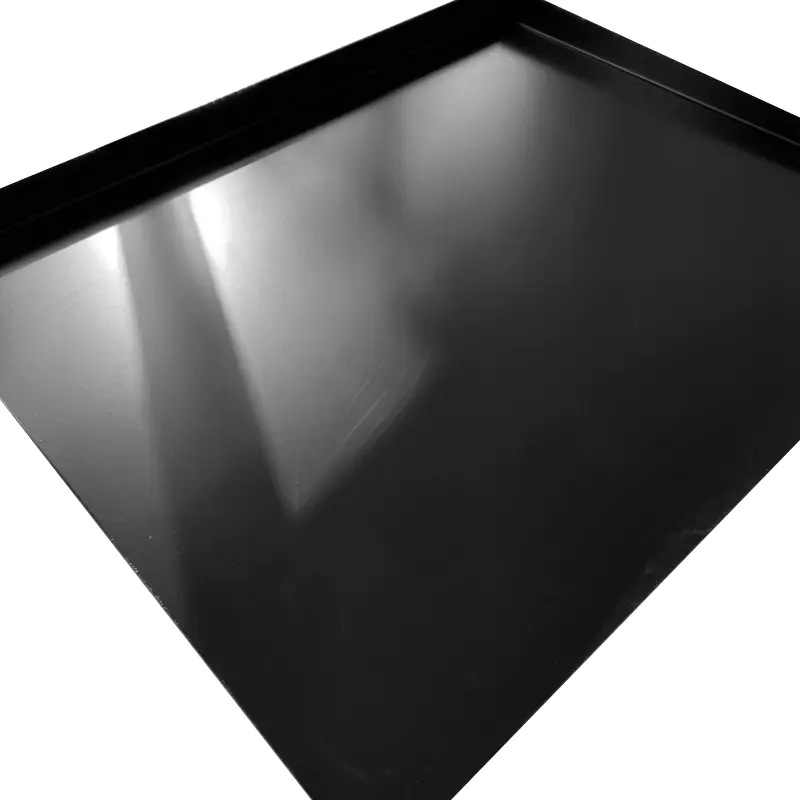
A stainless steel HVAC drain pan is generally chosen for environments with higher humidity or coastal air exposure, since the alloy resists surface rust well over long service periods. Stainless pans are also easier to keep clean because the smooth surface resists mineral scale buildup compared with coated steel.
Galvanized Steel Drain Pan
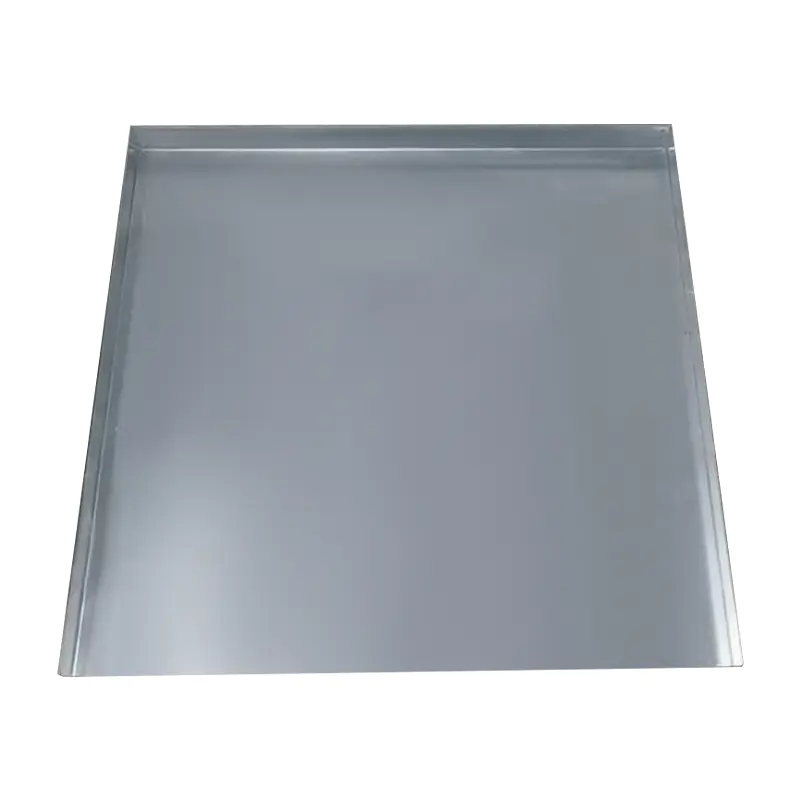
A galvanized steel drain pan uses a zinc coating over a steel base, which provides a cost effective middle ground between raw steel and stainless. Galvanized pans are widely used in standard residential installations where extreme humidity or salt exposure is not a primary concern.
Aluminum AC Drain Pan
An aluminum AC drain pan offers a lighter weight option that still resists corrosion effectively, which can simplify handling during installation in tight attic or ceiling spaces. Aluminum forms a natural oxide layer that helps protect the surface from further corrosion once installed.
| Material | Relative Weight | Typical Use Case |
|---|---|---|
| Stainless steel | Moderate | High humidity or coastal climates |
| Galvanized steel | Moderate | Standard residential systems |
| Aluminum | Light | Attic or tight clearance installs |
Comparing Stainless Steel and Galvanized Steel Drain Pans
Since these two materials are the most frequently specified across HVAC condensate pan projects, a side by side comparison across several practical criteria helps clarify where each option performs best.
Editorial comparison, blue area represents stainless steel, orange area represents galvanized steel, ten point scale.
Stainless steel tends to score higher on corrosion resistance and long term durability, while galvanized steel remains a practical choice for standard installations where budget efficiency and straightforward availability matter more than maximum corrosion resistance.
Common Causes of AC Drain Pan Overflow
A pan that keeps filling up or overflowing is usually a symptom of a blockage or airflow problem elsewhere in the system rather than a defect in the pan itself. Understanding the most frequent causes helps homeowners and technicians diagnose the issue faster.
Illustrative frequency ranking of reported drain pan overflow causes, ten point scale.
- Algae, dust, or debris restricting the condensate drain line
- Frozen or iced evaporator coil melting faster than the pan can drain
- A pan installed without adequate slope toward the outlet
- Physical cracks or corrosion holes in an aging pan
- A malfunctioning condensate pump on systems that rely on one
Where the Drain Pan Sits Inside the AC Unit
Placement depends on system configuration. In split systems, the primary pan sits beneath the indoor evaporator coil inside the air handler cabinet, commonly located in a closet, basement, or attic. A secondary pan is typically positioned beneath the entire air handler when the unit is installed above living space, since any leak in that location has a higher risk of causing ceiling or wall damage.
Simplified isometric view of typical primary and secondary drain pan placement within an air handler cabinet.
In package rooftop units, the condensate pan is built into the unit housing directly beneath the coil section, with the drain line routed through the roof curb or cabinet base to an exterior discharge point.
Drain Pan Sizing and Dimensions
Pan dimensions are matched to the footprint of the evaporator coil or air handler cabinet, so sizing is generally specified by the equipment manufacturer rather than chosen independently. Depth matters as much as length and width, since a shallow pan holds less reserve capacity if the drain line becomes temporarily restricted.
| Pan Type | Typical Depth | Common Setting |
|---|---|---|
| Primary pan | 1 to 2 inches | Beneath evaporator coil |
| Secondary pan | 2 to 3 inches | Beneath full air handler |
| Rooftop unit pan | Varies by model | Integrated into cabinet base |
Custom depth and footprint options are common on replacement projects where the original equipment pan is no longer available or where a non standard cabinet size requires a tailored fit.
Maintenance Schedule for an HVAC Condensate Pan
Routine cleaning reduces the chance of sediment and biological buildup accumulating faster than the drain line can carry it away. The line chart below reflects a general relationship between time since last cleaning and the likelihood of restricted drainage, used as a planning reference for maintenance scheduling.
General planning reference for overflow risk trend relative to months since last cleaning.
How to Clean an AC Drain Pan
- Turn off power to the air handler before accessing the pan area.
- Remove standing water and visible debris from the pan surface.
- Flush the drain line with a mixture recommended for condensate lines to clear buildup.
- Inspect the pan for cracks, rust spots, or coating wear.
- Confirm the float switch, if present, moves freely and resets correctly.
- Restore power and check that condensate flows toward the outlet as expected.
Sourcing an HVAC Drain Pan Manufacturer
Condenser and drain pan components work together as part of the refrigeration cycle, with the condenser handling heat exchange between refrigerant and outside air, and the drain pan managing the condensate that results from the cooling process. Buyers sourcing components at scale generally look for a supplier that can support both consistent stamping or welding quality and flexibility on non standard sizing.
Cixi Chenfeng Electric Co., Ltd. focuses on central air conditioning accessories, including condenser components built with copper tube and aluminum fin or all aluminum construction compatible with common refrigerants such as R410A and R32, alongside drain pan components produced through one piece stamping or welding using galvanized steel and stainless steel. Drain pans can incorporate anti mold coatings or an inclined drainage channel to help reduce water stagnation, and non standard sizing is supported for rooftop units, cabinet units, and other installation formats where drain outlet position and slope need to be adjusted.

What to Ask an Air Conditioner Drain Pans Factory
- Can the pan footprint and depth be adjusted for a specific cabinet or curb size
- What coating or finish options are available for humid or coastal environments
- Is drain outlet position adjustable to match existing drain line routing
- Can production support both stainless and galvanized options from the same supplier
Frequently Asked Questions
What is an air conditioner drain pan
It is a shallow metal tray positioned beneath the evaporator coil or air handler that collects condensate water and directs it toward a drain line, keeping moisture away from surrounding structure.
What does an HVAC drain pan do
It captures water produced as the evaporator coil cools indoor air, channeling that condensate to a drain outlet so it does not accumulate inside the cabinet or drip into the space below.
What is a condensate drain pan
Condensate drain pan is another common name for the same component, referring specifically to its role in managing the water that condenses on the cooling coil during operation.
Where is the drain pan on an air conditioner
On split systems it sits beneath the indoor evaporator coil inside the air handler cabinet, while on rooftop package units it is built into the cabinet base beneath the coil section.
How does an AC drain pan work
Condensate drips off the coil into the pan, which is sloped toward an outlet connected to a drain line, allowing water to leave the system in a controlled path rather than pooling.
What is the difference between a drain pan and a condensate pan
These terms describe the same component, with drain pan and condensate pan used interchangeably across residential and commercial HVAC documentation.
Why is my AC drain pan full of water
A full pan usually points to a restricted drain line, a clogged trap, or a pump issue preventing water from leaving the pan as quickly as it accumulates.
Why is my HVAC drain pan overflowing
Overflow is commonly linked to a blocked condensate line, insufficient pan slope, or a frozen coil that melts faster than the pan and line can handle the resulting water.
Why is my air conditioner drain pan leaking
Leaking often traces back to a cracked or corroded pan, a loose drain line connection, or a seam that has failed after extended exposure to standing water.
Why does my AC drain pan keep filling up
Recurring buildup typically indicates a drain line that needs regular flushing, algae or debris accumulating faster than routine maintenance addresses, or a pan slope that no longer directs water efficiently.
-
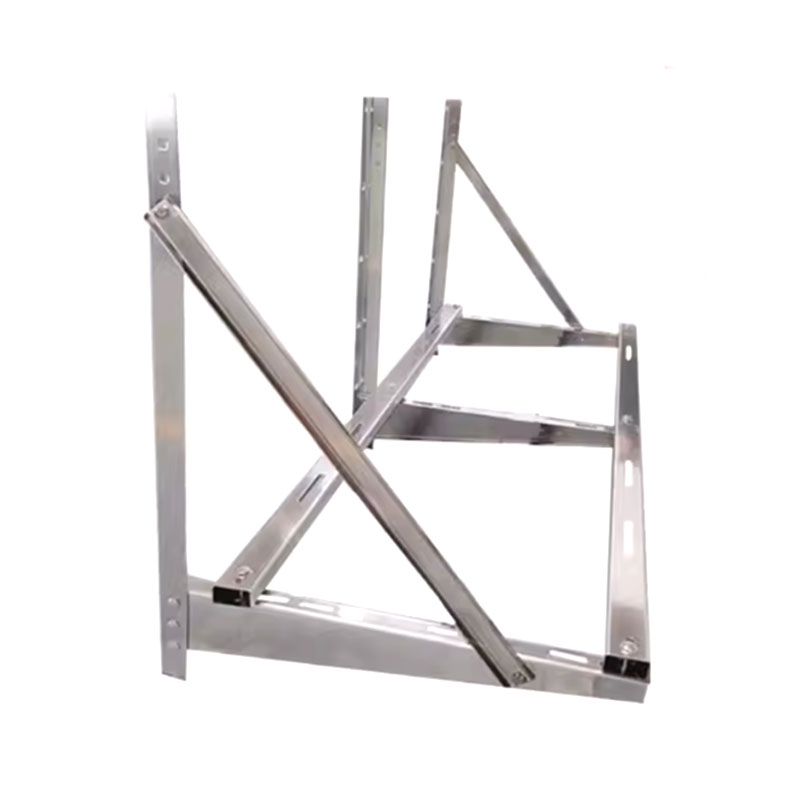
Our wall-mounted brackets provide sturdy support f...
-
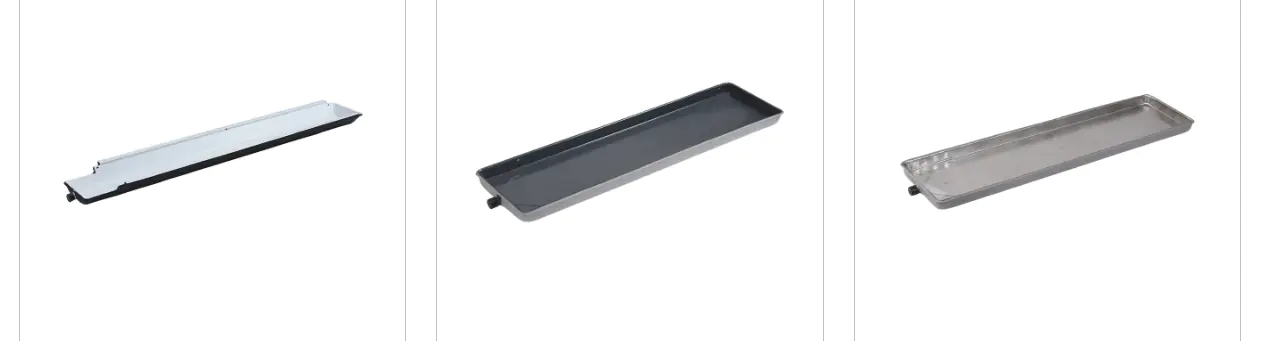
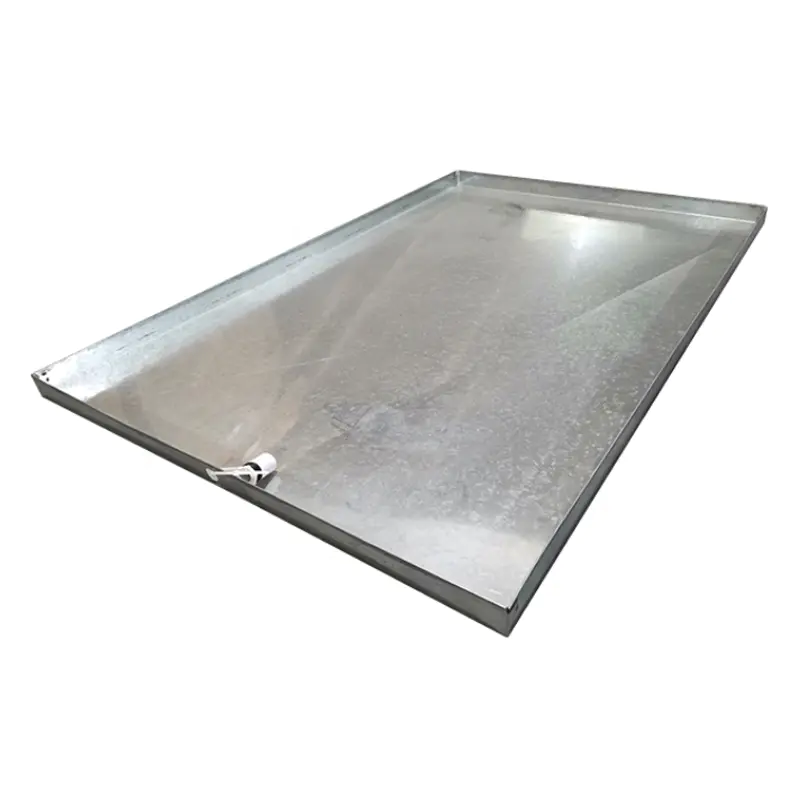
Galvanized Steel Condensate Collection Pans for Ai...
-
The Air Conditioner L Mounting Bracket is a profes...
-
Our Stainless Steel Air Conditioner Outdoor Unit B...
-
Galvanized Steel AC Drain Pans are specially desig...
-
Custom Square Aluminum & Stainless Steel Drain...


Contact info.
+86 15967843486 [email protected]
+86 15967843486
[email protected]
[email protected]
+86 15967843486
[email protected]
 +86-0574-63301198
 +86-13706742730
 No. 939, Qiye Road, Zhouxiang Town, Cixi City, Ningbo City, Zhejiang Province, China
Get A Free Quote
Copyright © 2025 by Cixi Chenfeng Electric Co., Ltd All Rights Reserved. Air Conditioner Parts Manufacturers Stainless Steel Sheet Metal Parts Factory
