Cixi Chenfeng Electric Co., Ltd

Industry News

Home > News > Industry News > What are the precautions for installing a residential ventilation fan?

What are the precautions for installing a residential ventilation fan?

Author: Admin Date: Mar 19,2026

Installing a residential ventilation fan correctly requires attention to five critical areas: selecting the right fan capacity for the room size, choosing the optimal mounting location, ensuring safe and code-compliant electrical wiring, routing the exhaust duct properly to the outside, and using anti-vibration mounting to minimize noise. Overlooking any one of these areas produces a fan that either underperforms, creates persistent noise problems, causes moisture damage from improper ducting, or presents a safety hazard. This guide addresses each precaution in practical detail, with specific figures and techniques drawn from real residential installation experience.

Whether you are fitting a bathroom exhaust unit, following a kitchen exhaust fan installation method for a range hood, or selecting a low-noise residential ventilation fan for a bedroom, the precautions below apply across all residential ventilation fan types and mounting configurations.

Select the Correct Fan Capacity Before Installation Begins

The most consequential pre-installation decision is fan capacity — expressed as airflow in cubic meters per hour (m³/h) or cubic feet per minute (CFM). An undersized fan fails to control humidity, odors, and pollutants regardless of how well it is installed. An oversized fan wastes energy, generates unnecessary noise, and can create negative pressure that draws combustion gases back through heating appliances.

The standard sizing method for residential ventilation fans is based on achieving a minimum number of air changes per hour (ACH) for the specific room type:

Room Type Min. Air Changes per Hour Example: 10 m² room, 2.5 m ceiling (25 m³) Minimum Fan Capacity
Bathroom / WC 8 – 12 ACH 25 m³ × 10 = 250 m³/h 250 m³/h (147 CFM)
Kitchen (with cooking) 15 – 20 ACH 25 m³ × 17 = 425 m³/h 400 – 600 m³/h (235–353 CFM)
Utility / Laundry 10 – 15 ACH 25 m³ × 12 = 300 m³/h 300 m³/h (176 CFM)
Bedroom / Living Room 3 – 6 ACH 25 m³ × 4 = 100 m³/h 100 – 150 m³/h (59–88 CFM)
Table 1: Minimum residential ventilation fan capacities by room type based on air change rate requirements.

Always add 10–15% to the calculated airflow to compensate for resistance in the duct run. Longer ducts, more bends, and grille resistance all reduce actual delivered airflow below the fan's rated output. A fan rated at 250 m³/h with a 3-meter straight duct delivers close to its rating; the same fan with a 6-meter run and two 90° elbows may deliver only 180–200 m³/h.

Choose the Optimal Mounting Location for Maximum Effectiveness

Where the fan is positioned within the room determines how effectively it captures pollutants, moisture, and stale air at their source. Poor location selection is a common reason why correctly sized residential ventilation fans still fail to control humidity or odors adequately.

  • Bathrooms: Mount the fan directly above or within 1 meter of the shower or bath — the primary moisture source. Mounting near the door draws air across the room before it is exhausted, reducing capture efficiency. Ceiling mounting is preferred; wall mounting at high level (within 200 mm of the ceiling) is acceptable when ceiling access is not available.
  • Kitchens: The kitchen exhaust fan installation method for range hoods positions the fan directly above the cooking surface, centered over the hob. The bottom of the range hood should be 650–750 mm above the hob surface for gas cooking and 550–650 mm for electric/induction — close enough to capture rising steam and fumes, far enough to avoid heat damage to the appliance.
  • General rooms: Position the fan on the opposite side of the room from the main air supply point (door gap, air vent, or window), so air is drawn across the full room volume rather than short-circuiting directly from inlet to exhaust.
  • Avoid mounting near windows: Fans positioned close to openable windows may recirculate outside air through the exhaust port on windy days, dramatically reducing effectiveness.

Electrical Safety: Wiring and Zone Compliance

Electrical installation for residential ventilation fans in wet areas — bathrooms, shower rooms, and above kitchen sinks — is governed by strict electrical zone regulations that dictate which fan IP (Ingress Protection) ratings are permitted at each location. Installing a fan with an inadequate IP rating in a wet zone is a significant safety risk and a code violation in most jurisdictions.

Figure 1: Required minimum IP rating for residential ventilation fans by bathroom electrical zone (IEC 60364 / BS 7671 classification).

Key electrical installation precautions for residential ventilation fans:

  • Always isolate the circuit at the consumer unit (breaker panel) before beginning any wiring work. Use a non-contact voltage tester to confirm the circuit is dead before touching any conductors.
  • In bathroom Zone 1 and Zone 2, fans must be controlled by a pull cord switch or a switch located outside the zone — standard wall switches are not permitted within 600 mm of a bath or shower.
  • Connect the fan to a dedicated 5A fused spur or unswitched FCU where possible, not to the lighting circuit. This allows the fan timer or humidistat to operate independently of the room light switch.
  • Use heat-resistant cable (85°C rated, minimum) in areas where the fan housing or duct may reach elevated temperatures — particularly in kitchen range hood installations directly above cooking surfaces.
  • Ensure the fan is properly earthed — the earth continuity conductor must be connected to the fan housing terminal. An unearthed metal fan housing in a wet environment is a shock hazard.

Duct Routing: The Most Frequently Mishandled Installation Step

Improper duct routing is responsible for a large proportion of residential ventilation fan failures in service — not because the fan itself stops working, but because a poorly routed duct causes condensation, backdrafts, reduced airflow, and eventual mold growth inside the duct or in the ceiling cavity. All residential ventilation fan exhaust must terminate directly to the outside — never into a roof space, wall cavity, or ceiling void.

Duct Material and Diameter Selection

  • Use rigid PVC or galvanized steel duct wherever possible. Flexible duct (aluminum or plastic foil) is acceptable for short final connections (maximum 1.5 m) but must not be used for the main duct run — it sags, creates low spots where condensate pools, and has significantly higher flow resistance than rigid duct.
  • Minimum duct diameter: 100 mm (4 in) for bathroom fans up to 180 m³/h; 125 mm (5 in) for fans up to 300 m³/h; 150 mm (6 in) or larger for kitchen range hoods. Using undersized duct reduces airflow and increases motor noise as the fan works against higher resistance.
  • Minimize bends: each 90° elbow is equivalent to approximately 1.5 meters of straight duct in terms of flow resistance. Plan the duct run to use the fewest bends at the largest practical bend radius.

Insulation and Condensation Prevention

Any duct section passing through an unheated space (attic, crawl space, or external wall cavity) must be insulated with a minimum of 25 mm closed-cell foam or foil-backed insulation. Without insulation, warm humid exhaust air condenses on the cold duct wall, dripping back into the fan housing or soaking the ceiling around the installation point. Insulate the entire duct length in cold climates, not just the external portion.

At the exterior termination, fit a wall vent or roof vent with a gravity-closing damper flap. This prevents cold outside air, wind, rain, and birds or insects from entering the duct when the fan is off. Check that the damper moves freely after installation — a stuck-open damper allows constant cold air infiltration; a stuck-closed damper completely blocks exhaust airflow.

Noise Reduction: Installing a Low-Noise Residential Ventilation Fan Correctly

A low-noise residential ventilation fan is only as quiet in practice as its installation allows. Fans that are mechanically quiet at the manufacturer's test bench often produce significantly more noise when installed due to vibration transmission through the structure and turbulence in poorly fitted ductwork. Fan noise levels are rated in sones or dB(A): a rating of 1.0–2.0 sones (approximately 38–45 dB(A)) is considered quiet for residential use; above 3.0 sones (50+ dB(A)), the fan is audible in adjacent rooms.

Figure 2: Typical noise level (dB(A)) comparison of residential ventilation fan installation methods — showing the impact of mounting technique on measured sound level.

Practical noise reduction measures during installation:

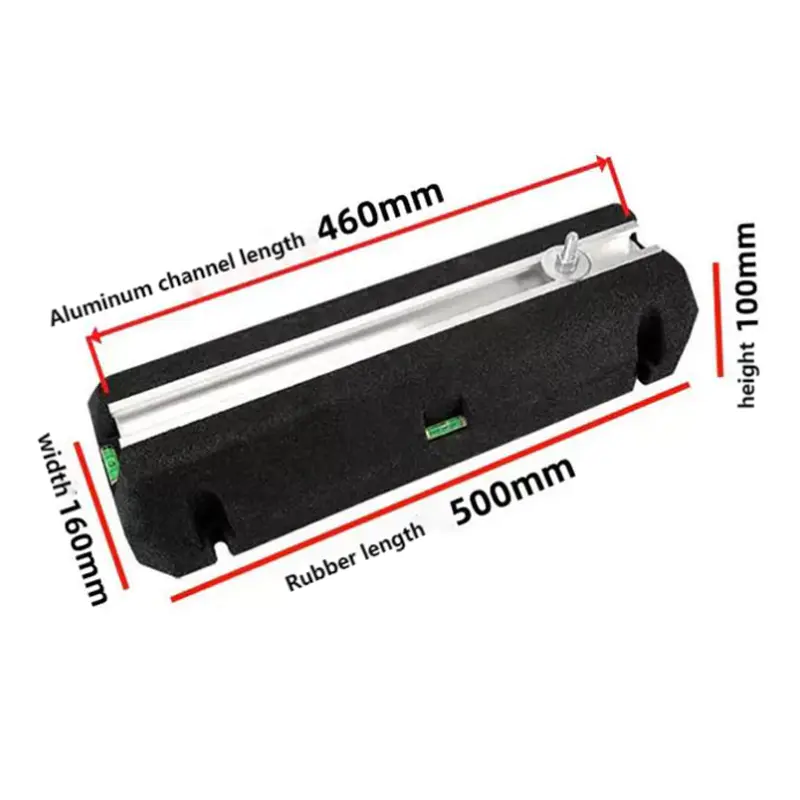
  • Anti-vibration rubber mounts: Fit rubber grommets or anti-vibration pads between the fan housing and the mounting surface (ceiling joist, wall bracket, or duct flange). This decouples motor vibration from the building structure — the primary transmission path for low-frequency fan noise into adjacent rooms.
  • Flexible duct connector: Use a short (150–300 mm) flexible duct section between the fan outlet and the rigid duct run. This prevents vibration from being transmitted along the duct into walls and ceiling cavities.
  • Avoid undersized or kinked duct: Airflow turbulence from undersized or poorly joined duct sections generates broadband noise independently of the fan motor. Ensure all duct joints are smooth and flush inside — protruding screws or edges create turbulence at the joint.
  • Select the correct speed setting: Many residential ventilation fans offer multiple speed settings. For a low-noise residential ventilation fan in a bedroom or living space, the lower speed setting combined with adequate duct sizing will maintain the required air change rate with significantly less noise than running a smaller fan at full speed.

Kitchen Exhaust Fan Installation Method: Specific Considerations

Kitchen range hoods and ceiling-mounted kitchen exhaust fans have installation requirements distinct from bathroom fans due to the higher airflow volumes, grease-laden air, and proximity to heat sources. The kitchen exhaust fan installation method requires the following additional precautions:

  • Grease filters must be accessible and removable: Install the range hood so the grease filter can be removed without tools for regular cleaning. Blocked grease filters reduce airflow by up to 40% and represent a fire risk — they should be cleaned every 4–6 weeks in active kitchens.
  • Fire-rated duct through kitchen ceilings: Where the kitchen exhaust duct passes through a fire-rated ceiling or floor, use fire-rated duct material and seal all penetrations with intumescent fire-stopping material. Grease deposits in unprotected kitchen ductwork are a documented fire propagation pathway.
  • Provide make-up air for high-capacity systems: Kitchen exhaust fans rated above 400 m³/h (235 CFM) can depressurize a sealed kitchen, causing backdrafting of gas appliance flues and difficulty opening doors. Provide a passive air inlet (trickle vent or makeup air duct) sized to at least 50% of the exhaust fan capacity for high-volume kitchen installations.
  • Never terminate a kitchen exhaust into a recirculation filter without appropriate charcoal filtration: Recirculation hoods that return air to the kitchen rather than exhausting it outside require both a grease filter and an activated charcoal filter to be effective. Without charcoal filtration, cooking odors are simply redistributed rather than removed.

Frequently Asked Questions

Q1: Can a residential ventilation fan exhaust into a roof space or attic? +
No. Exhausting a residential ventilation fan into a roof space or attic is one of the most common installation errors and causes serious moisture damage. Warm, humid exhaust air condenses when it meets the cooler attic environment, saturating insulation, promoting mold growth on roof timbers, and potentially causing structural deterioration. All exhaust duct must terminate directly to the exterior through a properly weatherproofed wall vent, soffit vent, or roof cap with a closing damper.
Q2: How do I calculate the right fan size for my bathroom? +
Multiply the room volume (length × width × ceiling height in meters) by the required air change rate — 8–12 air changes per hour for bathrooms. For example, a 3 m × 2.5 m bathroom with a 2.4 m ceiling has a volume of 18 m³. At 10 ACH: 18 × 10 = 180 m³/h minimum fan capacity. Add 10–15% for duct resistance: select a fan rated for at least 200 m³/h (approximately 118 CFM). For bathrooms with a separate shower enclosure or a bathtub and shower combined, use the higher end of the ACH range.
Q3: What is the quietest way to install a residential ventilation fan? +
Start by selecting a low-noise residential ventilation fan rated at 1.0–1.5 sones or below 40 dB(A). Mount it using rubber anti-vibration grommets between the housing and the structure. Connect to the duct with a 150–300 mm flexible duct section rather than a rigid direct connection. Use properly sized, smooth-bore rigid duct for the main run to minimize airflow noise. Avoid undersized duct or excessive bends, as these generate turbulence noise independently of the motor. Running the fan at its lower speed setting with an adequately sized duct further reduces operating noise.
Q4: Does a bathroom ventilation fan need its own dedicated electrical circuit? +
A dedicated circuit is not strictly required for most bathroom fans, as their power consumption is modest (typically 15–35 watts). However, it is best practice — and in some jurisdictions required — to connect the fan to a dedicated 5A fused spur (FCU) rather than the lighting circuit. This allows the fan's integrated timer or humidistat to run after the light is switched off without keeping the room's lighting circuit live, and ensures the fan circuit is independently protected.
Q5: How long should a bathroom fan run after the light is switched off? +
The overrun timer on a bathroom fan should be set to run for 10–20 minutes after the light (or trigger switch) is turned off. This post-use period allows moisture generated during a shower to be fully exhausted before the fan stops. For rooms where the fan is controlled by a humidistat rather than a timer, the fan will continue running until relative humidity drops below the set point — typically 65–70% RH — regardless of whether the light is on or off, which provides more accurate control in high-use bathrooms.
Share:
Contact Us Now
Product
Related Product