Cixi Chenfeng Electric Co., Ltd

Industry News

Home > News > Industry News > What is a stainless steel BBQ grill?

What is a stainless steel BBQ grill?

Author: Admin Date: Jun 10,2026

The best stainless steel BBQ grill for most households is a freestanding, 304-grade stainless steel model with a cooking area of 450–600 square inches — large enough for a family of four to six, durable enough for year-round outdoor use, and resistant to rust, grease corrosion, and thermal warping. Stainless steel consistently outperforms coated cast iron and porcelain-enamel alternatives in longevity, ease of cleaning, and resistance to the outdoor elements — making it the preferred material for backyard, garden, and commercial grilling environments alike.

This guide covers everything you need to choose, install, use, and maintain an outdoor BBQ grill — from material grades and grill configuration types to cooking techniques, cleaning schedules, and common questions from real buyers. Whether you are equipping a backyard patio, a campsite, or a commercial outdoor kitchen, the information below will help you make an informed, confident decision.

Cixi Chenfeng Electric Co., Ltd. is a China outdoor equipment manufacturer and outdoor stainless steel kitchen equipment company, offering wholesale ODM/OEM customization services for outdoor BBQ grills, outdoor kitchen stations, and related outdoor cooking equipment across global markets.

Stainless Steel vs. Other Grill Materials: Which Actually Performs Better?

The material of your outdoor barbecue grill determines how long it lasts, how it handles heat, how easy it is to clean, and how it weathers seasons of outdoor exposure. The three most common materials — stainless steel, cast iron with enamel coating, and carbon steel — each have distinct trade-offs that matter depending on how frequently you grill, where the grill is stored, and what you cook.

Property Stainless Steel (304) Porcelain-Coated Cast Iron Carbon Steel
Rust Resistance Excellent Good (until coating chips) Poor (requires seasoning)
Heat Retention Moderate Excellent Good
Ease of Cleaning Very Easy Moderate Moderate
Estimated Lifespan 10–20+ years 5–10 years 3–7 years
Weight Light to Medium Heavy Medium
Outdoor Suitability Excellent Good Fair
Food Safety Excellent (non-reactive) Good Good (when seasoned)
Table 1: Material comparison for outdoor BBQ grills across key performance dimensions.

Estimated Grill Lifespan by Material (Years, with Proper Maintenance)

Stainless Steel (304) 20yr Porcelain Cast Iron 10yr Carbon Steel 7yr

Stainless steel barbecue grills offer the longest service life of any common grill material — up to 20 years with regular maintenance — compared to 10 years for porcelain-coated cast iron and around 7 years for carbon steel. The longevity advantage of 304-grade stainless steel is rooted in its chromium oxide passivation layer, which self-repairs at a microscopic level when scratched, preventing the progressive rust that destroys coated or bare steel grills. For buyers investing in a heavy duty BBQ grill or commercial BBQ grill, the per-year cost of ownership strongly favors stainless steel over its alternatives.

Understanding Stainless Steel Grades: 201 vs. 304 vs. 316

Not all stainless steel is equal. The grade stamped on your stainless steel barbecue grill determines its actual corrosion resistance and food safety profile. Grade 201 contains manganese instead of nickel — cheaper to produce but noticeably less corrosion-resistant in humid, coastal, or high-temperature environments. Grade 304 (18% chromium, 8% nickel) is the industry standard for quality outdoor cooking equipment and offers excellent resistance to oxidation and the acidic compounds in marinades, sauces, and smoke condensate. Grade 316, which adds molybdenum, is specified for marine environments or professional commercial applications where exposure to salt air is constant.

Choosing the Right BBQ Grill Type for Your Outdoor Space

The configuration of your outdoor BBQ stand or grill should match your cooking frequency, the number of people you typically feed, your outdoor space dimensions, and whether portability matters. Each grill format has a distinct use case — choosing the wrong category for your lifestyle leads to frustration, not better barbecue.

Freestanding BBQ Grills: Backyard and Garden Use

A freestanding BBQ grill or backyard BBQ grill on a cart frame is the most versatile format for home use. These units typically offer 400–700 square inches of primary cooking surface — enough for 20–30 burger patties simultaneously — plus side shelves for prep space and a lower cabinet for accessory storage. Freestanding models on lockable caster wheels can be repositioned on a patio or garden BBQ grill setup without tools, an important practical consideration for smaller outdoor spaces where the grill must be stored against a wall when not in use.

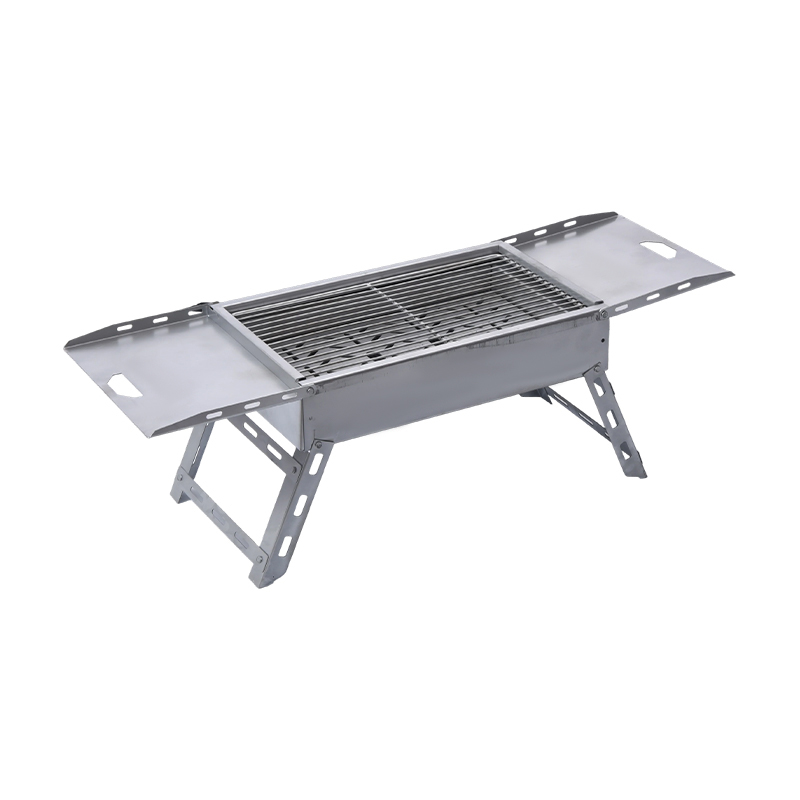
Portable BBQ Grills: Camping and Tailgating

A portable BBQ grill or camping BBQ grill prioritizes weight and packability over cooking area. Quality portable models built from stainless steel offer a cooking surface of 150–280 square inches — sufficient for 2–4 people — and fold or disassemble into a bag-friendly form. For camping applications specifically, stainless steel is far superior to painted or coated alternatives because the surface survives transportation abrasion, campfire temperature spikes, and irregular cleaning schedules without degrading.

Charcoal BBQ Grills: Flavor-First Cooking

A charcoal BBQ grill or charcoal barbecue grill produces the deep smoky flavor that gas cannot replicate — the result of volatile organic compounds from the charcoal itself and the drip-ignited flare-up smoke from meat fat. Charcoal grills reach surface temperatures of 700–900°F compared to 500–600°F for most gas grills, enabling superior Maillard reaction browning on steaks and chops. The trade-off is longer setup time (15–20 minutes to reach cooking temperature vs. 10–12 minutes for gas) and more cleaning effort after each session.

Commercial and Professional BBQ Grills

A commercial BBQ grill or professional BBQ grill is engineered for continuous service — restaurants, catering operations, outdoor venues, and food trucks — with heavier-gauge construction (typically 14-gauge or thicker), higher BTU burner arrays, and expanded cooking zones that can exceed 1,000 square inches. These units are also referred to as outdoor grill stations when integrated into a full outdoor kitchen configuration with countertops, storage, and utility connections built in.

Typical Cooking Surface Area by Grill Type (sq. inches)

0 250 500 750 1000+ 215 Portable 360 Charcoal 550 Freestanding 750 Heavy Duty 1100 Commercial

This chart compares the typical primary cooking surface area across five major outdoor BBQ grill categories. Commercial and professional BBQ grills offer more than five times the cooking area of portable models, reflecting their purpose-built design for high-volume outdoor cooking service. For home buyers, the freestanding gas or charcoal grill at 450–600 square inches typically represents the best balance between cooking capacity and manageable physical footprint on a residential patio or garden. Heavy-duty models at 700–800 square inches are increasingly popular for frequent entertainers who host groups of 10 or more guests regularly.

Gas Grill vs. Charcoal Grill: An Honest Comparison for Outdoor Cooks

The gas-versus-charcoal debate is one of the most searched questions among outdoor cooking enthusiasts — and the answer depends entirely on your priorities. There is no single correct answer, but there are clear winners in each performance category.

Gas vs. Charcoal BBQ Grill: Performance Radar

Flavor Depth Temperature Ease of Use Cleanup Preheat Speed Cost/Session Gas Grill Charcoal Grill

The radar chart makes the trade-off visually clear: charcoal grills dominate on flavor depth and maximum temperature, while gas grills excel in ease of use, cleanup speed, and preheat time. Neither type is universally superior — a charcoal barbecue grill is ideal for weekend sessions where slow cooking, smoke flavor, and high-heat searing are priorities, while a gas-powered outdoor cooking grill suits weeknight meals where convenience and quick cleanup matter most. Many experienced outdoor cooks maintain one of each type for different occasions.

Category Gas Grill Charcoal Grill Winner
Preheat Time 10–12 minutes 15–25 minutes Gas
Max Temperature 500–600°F 700–900°F Charcoal
Smoke Flavor Mild Rich and deep Charcoal
Temperature Control Precise (knob-based) Requires skill Gas
Post-Cook Cleanup Easy (15–20 min) Moderate (20–35 min) Gas
Portability Moderate (propane tank) High (fuel is packable) Charcoal
Table 2: Head-to-head comparison of gas and charcoal outdoor BBQ grills across key performance dimensions.

How to Set Up and Use Your Outdoor BBQ Grill Correctly

Proper setup is the foundation of safe, consistent grilling results. A poorly assembled or improperly positioned outdoor BBQ grill creates safety risks and leads to uneven cooking results that frustrate even experienced cooks. The steps below apply to most freestanding stainless steel gas and charcoal grills.

Placement and Safety Clearances

  • Position the grill on a flat, non-combustible surface — concrete, stone paving, or brick. Never place on wooden decking without a grill mat underneath.
  • Maintain a minimum 3-foot clearance on all sides from any structure, fence, or overhead obstruction. For gas grills, 5 feet from the house wall is recommended.
  • Ensure the grill is level before igniting — unlevel grills cause grease to pool unevenly, increasing flare-up risk and burning food on one side.
  • Lock the caster wheels after positioning to prevent accidental movement during cooking.

First-Use Seasoning (Stainless Steel Grills)

  1. Wash grill grates with warm soapy water to remove any manufacturing residue. Rinse and dry completely.
  2. Apply a thin coat of high-smoke-point oil (canola, flaxseed, or vegetable oil) to all cooking grate surfaces using a folded paper towel held by tongs.
  3. Heat the grill to 400–450°F (gas: high heat; charcoal: let coals ash over fully) and hold temperature for 15 minutes.
  4. Allow the grill to cool completely, then wipe away any excess oil with a clean cloth. The grill is now ready for regular cooking use.

Temperature Zones: The Key to Versatile BBQ Cooking

Creating distinct heat zones on your BBQ cooking grill is the most important skill for cooking a variety of foods at the same time. On a gas grill, set one or two burners to high and leave one on low or off — this creates a direct searing zone and an indirect cooking zone simultaneously. On a charcoal grill, bank all the coals to one side. Using indirect heat for thick cuts (over 1.5 inches) and direct heat for thin items prevents the common problem of charred exteriors with raw interiors.

Cleaning and Maintaining a Stainless Steel BBQ Grill for Long-Term Use

A stainless steel BBQ grill that is properly maintained will look and perform like new for a decade or more. Neglect, on the other hand, accelerates surface pitting, grate corrosion, and burner failure — significantly shortening the useful life of an otherwise durable appliance. The following schedule covers the minimum maintenance actions required to protect your investment.

After Every Use

  • While the grill is still warm (not hot), brush the cooking grates with a stainless steel wire brush to remove food debris.
  • Turn the burners to high for 5 minutes to burn off residual grease (a process called "burning off"), then shut down completely.
  • Wipe exterior stainless steel surfaces with a damp cloth in the direction of the steel grain — always with-grain, never across-grain, to avoid micro-scratches that trap moisture.

Monthly Deep Cleaning

  • Remove grates and soak in warm soapy water for 30 minutes. Scrub with a non-abrasive pad, rinse, and dry before reinstalling.
  • Remove the drip tray or grease pan, empty and clean with hot soapy water. A grease-clogged drip tray is the primary cause of grill fires.
  • Inspect burner tubes for spider webs, debris blockages, or rust. Clear blockages with a thin wire. Replace any burner showing significant corrosion.
  • Check all gas connections and hoses for cracks or brittleness if applicable. Apply soapy water to connections and look for bubbles when the gas is on.

Grill Performance Score Over Time: Maintained vs. Neglected (0–100)

0 25 50 75 100 Yr 1 Yr 2 Yr 3 Yr 4 Yr 5 Yr 6 Well Maintained Neglected

This chart models the performance score trajectory of a stainless steel barbecue grill over six years under two maintenance scenarios. A properly maintained grill retains approximately 90–95% of its original performance score through year six, with only marginal degradation from normal wear on consumable components like grates and igniters. A neglected grill drops to approximately 30% of its original performance by year five — the result of accumulated grease buildup reducing heat distribution efficiency, corroded burner orifices restricting gas flow, and degraded grates that stick to food rather than releasing it cleanly. The maintenance effort required to stay on the upper curve is modest — approximately 20–30 minutes per month — making it one of the best returns on time investment in outdoor cooking.

Why does my grill turn black after use? The black discoloration on stainless steel grill surfaces is carbonized grease — not rust, and not a sign of material failure. It accumulates faster in higher-fat cooking sessions (burgers, sausages, skin-on chicken). A 15-minute high-heat burn-off at the end of each session incinerate the majority of this residue; a monthly scrub with a dedicated stainless steel cleaner removes the remainder. Regular attention prevents the buildup from baking permanently into the surface.

Frequently Asked Questions About Stainless Steel BBQ Grills

The following questions reflect real searches and inquiries from outdoor cooking enthusiasts, homeowners, and commercial buyers shopping for outdoor BBQ grills.

Q1. What is the best stainless steel BBQ grill for home use?

For most households, a 304-grade stainless steel freestanding gas or charcoal grill with 450–600 square inches of cooking surface is the best choice. Look for at least 3mm-thick grates, a grease management tray, and side shelves for prep space. For a family of four, 450 square inches comfortably handles a full meal of burgers, vegetables, and sides simultaneously.

Q2. Are stainless steel grills better than cast iron?

Stainless steel grills outperform cast iron in rust resistance, weight, and outdoor durability. Cast iron retains and distributes heat more evenly and produces excellent sear marks, but chips and rusts if the enamel coating is damaged. For an outdoor grill left in variable weather conditions, stainless steel is the more practical and longer-lasting choice for most users.

Q3. How long does a stainless steel grill last?

A quality 304-grade stainless steel BBQ grill typically lasts 10–20 years with proper maintenance. The main consumable components — grates, burner tubes, and igniters — may need replacement every 3–5 years, but the primary stainless steel body and frame can outlast multiple sets of internal components with consistent care.

Q4. Do stainless steel grills rust?

Grade 304 stainless steel is highly rust-resistant but not entirely rust-proof in coastal or very high-humidity environments. Surface rust spots (called "tea staining") can appear if the grill is not dried after rain or if it is exposed to salt air. These spots are surface-only and can be removed with a stainless steel cleaner. Storing the grill with a weather-resistant cover significantly reduces this risk.

Q5. How do you clean a stainless steel barbecue grill?

After each use, brush grates while warm with a stainless steel wire brush, then run burners on high for 5 minutes to incinerate remaining grease. For exterior surfaces, wipe with a damp microfiber cloth in the direction of the steel grain — never across-grain or with abrasive pads. Monthly deep cleaning should include soaking the grates and emptying the grease trap.

Q6. Is stainless steel safe for grilling food?

Yes. Grade 304 stainless steel is food-safe, non-reactive, and approved for direct food contact by international food safety standards. Unlike coated or galvanized metals, stainless steel does not leach toxic compounds at grilling temperatures. It is the same material used in professional kitchen equipment, surgical instruments, and food processing machinery — one of the safest materials available for high-temperature cooking applications.

Q7. What size BBQ grill do I need for a family of 4?

A cooking surface of 400–500 square inches is sufficient for a family of four. As a rule of thumb, allow 72 square inches per burger or chicken breast. A 450 sq. in. grill can handle 6 burgers, 4 chicken pieces, and a tray of vegetables simultaneously — covering a complete family meal. If you entertain guests regularly, consider sizing up to 550–600 square inches.

Q8. How do you maintain a BBQ grill for long life?

The four pillars of long grill life are: clean after every use, season grates regularly with cooking oil, cover the grill when not in use, and inspect components (burners, hoses, grease traps) monthly. Annual deep cleaning of all internal components keeps heat distribution even and prevents grease fire risk. A grill cover rated for UV and rain exposure is one of the single most cost-effective accessories you can purchase.

Share:
Contact Us Now
Product
Related Product