

 English
 中文简体
 русский
 Français
 عربى
 Español
Industry News
Heavy Duty Outdoor Brackets: Material, Load Ratings, and Buying Checks
A bracket that fails rarely fails dramatically. It sags a few millimetres, the outdoor unit tilts back, the condensate stops draining, and a service call two summers later turns into a warranty argument. Heavy duty outdoor brackets are sold on a single number — load capacity — yet that number says almost nothing about whether the bracket will still be straight after ten winters.
The short answer: heavy duty in a real outdoor bracket comes from three things working together. A load path that carries weight, wind and vibration into the wall without twisting. A coating or alloy that matches the local atmosphere, whether coastal or inland. And fixing geometry that matches the substrate the installer actually has — concrete, brick, or a steel frame. Get those three right and the kilogram rating takes care of itself.
Content
- 1 What Heavy Duty Actually Means Beyond the Load Rating
- 2 Material Choice Decides Where the Bracket Fails
- 3 Anatomy of a Bracket That Survives Ten Winters
- 4 Comparing Bracket Options Without Overpaying
- 5 Installation Details That Cause Callbacks
- 6 Vetting the Supplier Behind the Drawing
- 7 Frequently Asked Questions
- 7.1 Q1. How much weight should a heavy duty outdoor bracket hold?
- 7.2 Q2. Is 304 stainless better than hot-dip galvanized steel?
- 7.3 Q3. What sheet thickness counts as heavy duty?
- 7.4 Q4. Can the bracket be customized for our own anchor pattern?
- 7.5 Q5. Which coating should we specify for a humid climate?
- 7.6 Q6. How do we check quality before shipment?
What Heavy Duty Actually Means Beyond the Load Rating
A 40 kg outdoor unit does not push on its bracket with 40 kg of steady force. It applies a static load, then adds a dynamic component every time the compressor starts, the fan spins up, or a gust hits the grille. Installation practice across the HVAC trade is to size the bracket and its anchors for at least 1.5 times the operating weight, and closer to 2 times where the unit sits at height, on an exposed elevation, or in a region with snow load.
Corrosion allowance is the second half of "heavy duty", and it is the half buyers most often skip. Zinc coating thickness, not steel thickness, decides whether a galvanized bracket is still structurally useful in year eight. Inland, a hot-dip coating loses only a few micrometres per year; within a few kilometres of salt water the same coating can be consumed an order of magnitude faster. That is why a 2.5 mm stainless bracket frequently outlasts a 4 mm painted one.
The table below shows the rules of thumb our engineers use when a customer sends over a unit specification sheet without a bracket drawing.
| Unit capacity | Typical outdoor unit weight | Suggested bracket rating | Fixing note |
|---|---|---|---|
| 2.6–3.5 kW (9k–12k BTU) | 25–35 kg | 60–75 kg static | 2 × M8 into concrete |
| 5.3 kW (18k BTU) | 38–45 kg | 90 kg static | 2 × M10, minimum 70 mm embedment |
| 7.1 kW (24k BTU) | 45–55 kg | 110 kg static | 2 × M10 plus a fourth hole for anti-tilt |
| 10.5 kW (36k BTU) | 60–75 kg | 150 kg static | 4 × M10 or chemical anchor |
Material Choice Decides Where the Bracket Fails
Carbon steel is stronger on paper than stainless, and that surprises buyers who assume the opposite. The chart below uses typical minimum specified yield values for the grades most often quoted in bracket drawings. What it does not show is that a 304 bracket bent from cold-rolled strip work-hardens at the corners, so the effective strength of the finished part is usually higher than the flat-sheet number.
For inland installations, hot-dip galvanized carbon steel remains the sensible volume choice: it is stiff, weldable and forgiving of site handling. Coastal projects and rooftop plant tend to justify 304 or 316L. Aluminium earns its place when weight matters more than stiffness and the unit is small — a 6063 arm on a 30 kg unit is fine, on a 70 kg unit it is not.
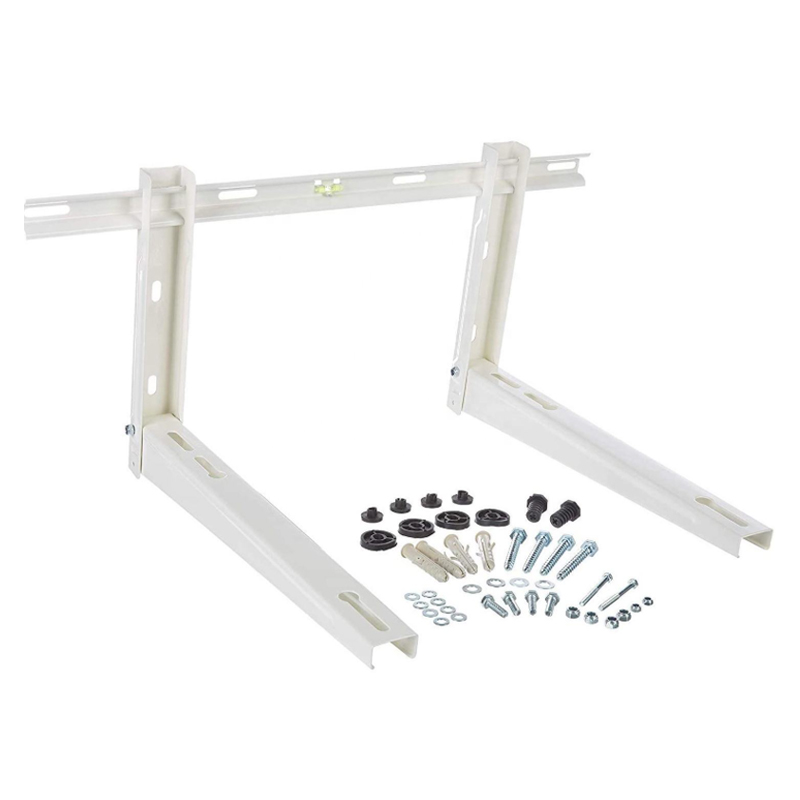 Stainless Steel Outdoor AC Unit BracketFor coastal or rooftop installations, this stainless steel bracket offers corrosion resistance and 200–250 kg load capacity in standard or OEM sizes.View Product →
Anatomy of a Bracket That Survives Ten Winters
Two brackets can weigh the same and behave completely differently. The difference sits in four features, all of which cost very little at the drawing stage and a great deal at the service call.
- A continuous return flange along the top and bottom of the arm. This single fold is what stops the arm from twisting under compressor vibration, and it usually adds more real strength than another 0.5 mm of sheet.
- Slotted mounting holes rather than round ones, so the installer can align the unit without re-drilling on site.
- At least four anchor positions, even when the drawing only calls for two. The extra holes cost nothing; a stripped anchor hole costs a site visit.
- Deburred edges and a coating that covers the cut faces, because rust on an outdoor bracket almost always starts where the steel was sheared.
Comparing Bracket Options Without Overpaying
The chart below is a qualitative comparison of the three configurations we quote most often. It is a decision aid, not a test report: the scores reflect how each option usually behaves in residential and light-commercial installations, and they shift as soon as the unit size or the environment changes.
Where the radar chart earns its keep is in the middle of the range. A stainless bracket wins on corrosion and weight but loses badly on cost, so it is rarely the right answer for an inland retrofit of forty units. A galvanised bracket wins on cost and stiffness but needs a real coating specification, not the word "galvanised" on its own. And aluminium only looks attractive until the wall plate starts to flex.
 304 Stainless Steel Wall-Mounted Support BracketWhere corrosion resistance matters more than cost, this 304 stainless wall bracket supports shelves and equipment with customizable sizes and pre-drilled holes.View Product →
Installation Details That Cause Callbacks
Most bracket complaints we investigate come back to the wall interface rather than the steel. The sequence below reflects what our customers' installation teams report as the most reliable order of work.
- Confirm the substrate before drilling. A 100 mm brick leaf and a 150 mm reinforced concrete wall need different anchors, and a hollow block wall may need a through-bolt and a spreader plate.
- Use the bracket's full anchor pattern, not just the two diagonal holes that line up easily. The unused holes exist for wind uplift and for the second installer.
- Keep the arm horizontal to within roughly 2 mm across its length, then check the unit's own drain slope — a bracket that is flat but a unit that tilts back will still pool water.
- Fit vibration isolation between the unit feet and the bracket, not between the bracket and the wall. Isolation at the feet is replaceable; isolation buried behind a wall plate is not.
- Re-torque anchors after the first cooling season. Thermal cycling loosens mechanical fixings far more often than corrosion does.
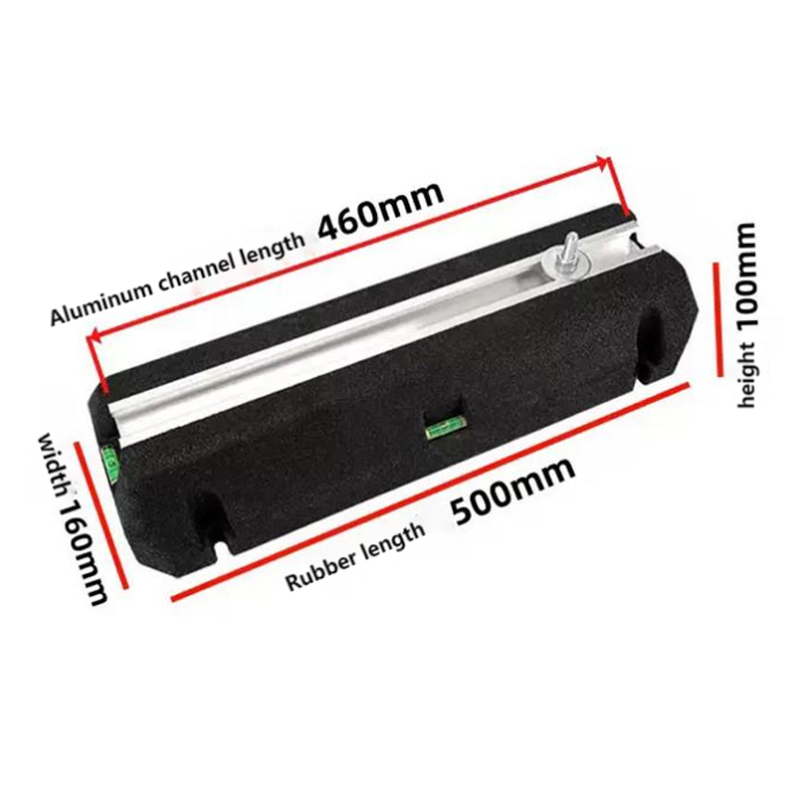 Rubber Vibration Isolator Pads for HVAC UnitsFor mounting outdoor AC units, these 5 mm rubber pads reduce vibration and noise, complementing a careful wall-interface installation.View Product →
Vetting the Supplier Behind the Drawing
Once the specification is settled, the risk moves to the factory. Three questions separate a sheet metal supplier that can hold a tolerance from one that can only hold a price: whether the same team controls the drawing, the bend program and the coating line; whether wall thickness is checked on incoming coil or only on the finished part; and whether the anchor holes are punched in one hit or drilled afterwards, because drilled holes drift.
Cixi Chenfeng Electric Co., Ltd. is a professional enterprise in the electrical field, focusing on the development and production of central air conditioning accessories. As an air conditioner parts manufacturer and sheet metal parts factory, the company combines technical strength, reliable product quality and a good market reputation, and holds an important position in the central air conditioning accessories industry. Production covers air conditioning accessories and custom sheet metal parts including brackets, water trays and related assemblies, with precision manufacturing and strict quality control providing solid quality assurance for air conditioning systems. Buyers who want to see the press lines and coating process before placing a first order can review the factory overview, and the company profile sets out the OEM and ODM scope in more detail.
Frequently Asked Questions
Q1. How much weight should a heavy duty outdoor bracket hold?
Aim for 1.5 times the outdoor unit's operating weight as a minimum, and closer to 2 times for rooftop or exposed coastal sites. Check the nameplate rather than the catalogue, since refrigerant charge changes the weight.
Q2. Is 304 stainless better than hot-dip galvanized steel?
For corrosion life near the sea, yes. For stiffness per unit cost inland, no. Stainless has a lower specified yield strength than common carbon grades, so it usually needs a slightly different fold profile to match the same rigidity.
Q3. What sheet thickness counts as heavy duty?
For wall plates, 4 mm to 6 mm is the working range on 24k BTU and larger units. Below 3 mm, the return flange and gusset detail matter more than the thickness figure printed on the drawing.
Q4. Can the bracket be customized for our own anchor pattern?
Yes. Hole pitch, slot length, arm offset and coating colour can all be set from a drawing or a sample, and the mounting geometry is usually confirmed before tooling starts.
Q5. Which coating should we specify for a humid climate?
Specify a coating weight rather than a coating name — typically 60 µm to 80 µm of zinc for hot-dip galvanizing, or a documented powder coat thickness over a zinc phosphate pre-treatment. A name alone cannot be inspected.
Q6. How do we check quality before shipment?
Ask for the anchor hole pitch, arm squareness and coating thickness on the inspection report, and request photos of the first article against the drawing. Those three checks catch most of the issues that appear on site.
-
This Outdoor stainless steel folding oven is a ver...
-
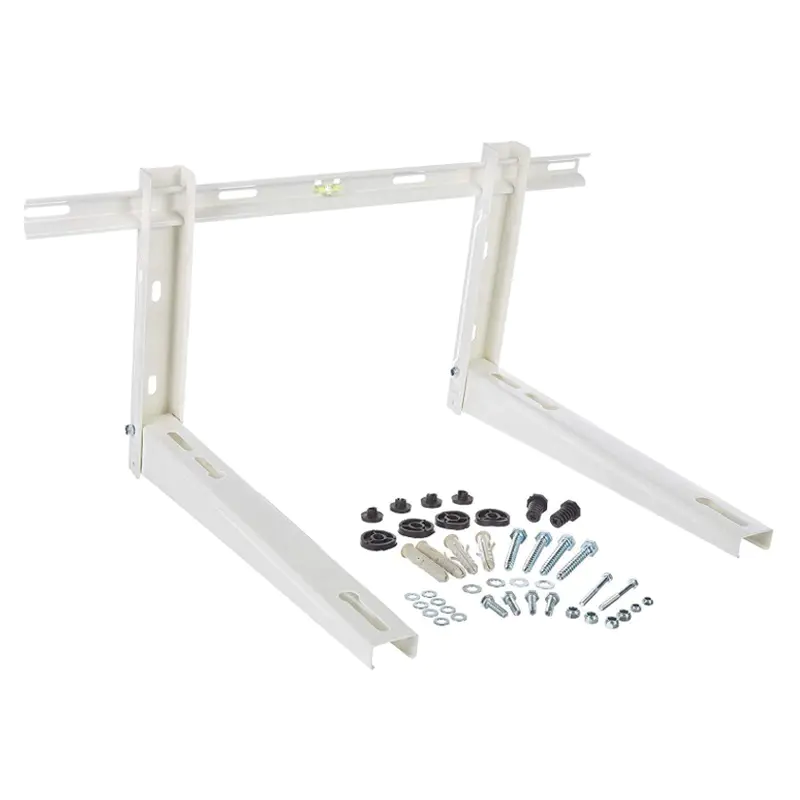
Our Stainless Steel Air Conditioner Outdoor Unit B...
-
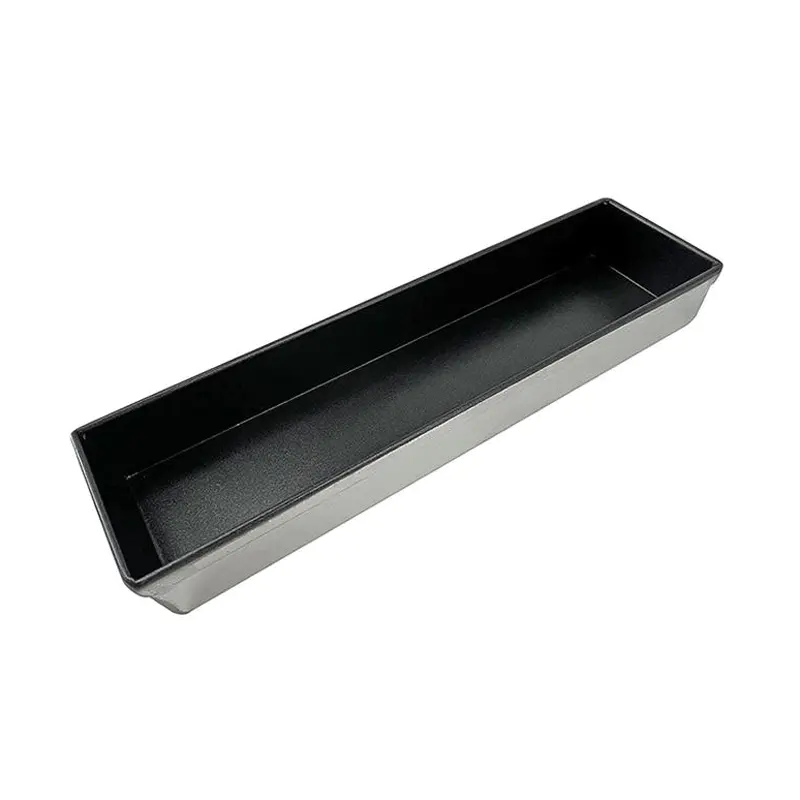
Our Black Plastic Meat Trays for Fresh and Frozen ...
-
Detailed Description: Crafted with pure handwoven ...
-
Detailed Description: Made with natural brown wove...
-
Detailed Description: Different colors are combine...

Contact info.
+86 17398066504 [email protected]
+86 17398066504
[email protected]
 +86-0574-63301198
 +86-13706742730
 No. 939, Qiye Road, Zhouxiang Town, Cixi City, Ningbo City, Zhejiang Province, China
Hot Products
Stainless Steel Equipment & Folding BBQ Grill Series Air Conditioner Drain Pan And Outdoor Unit Bracket Ventilation FansGet A Free Quote
Copyright © 2025 by Cixi Chenfeng Electric Co., Ltd All Rights Reserved. Air Conditioner Parts Manufacturers Stainless Steel Sheet Metal Parts Factory
