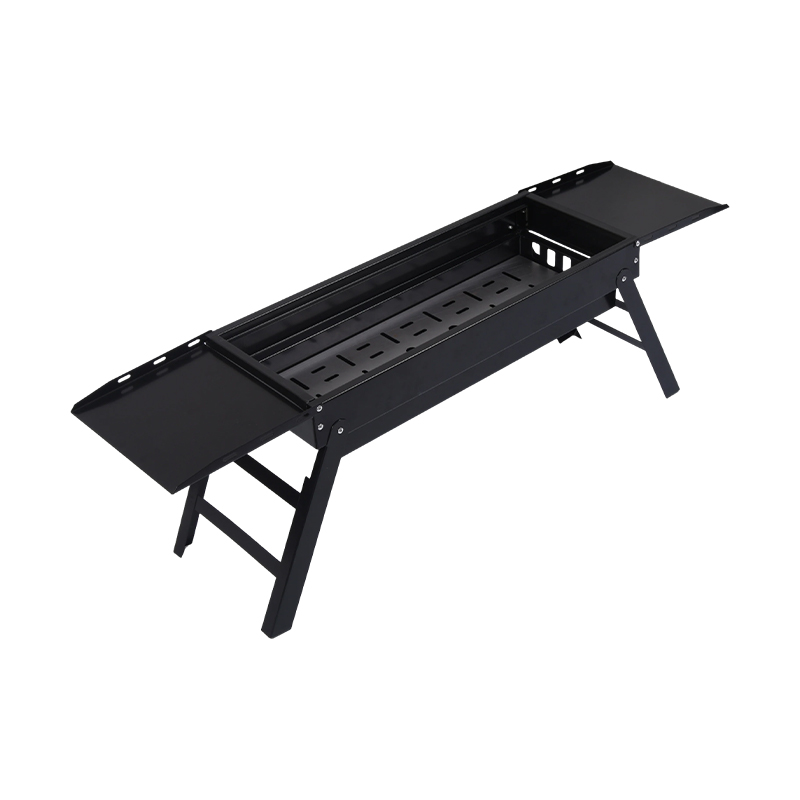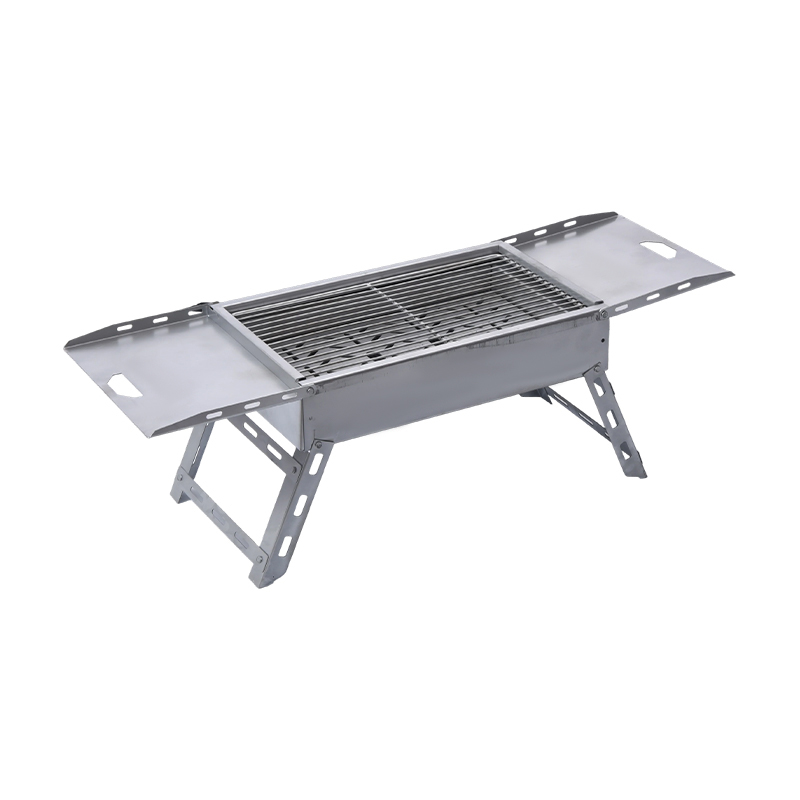
A quality portable outdoor BBQ grill transforms any location — campsite, beach, tailgate, or backyard — into a fully functional cooking station. The right equipment handles high heat reliably, packs down small enough to fit in a car trunk, and withstands repeated use across seasons. For buyers navigating a crowded market, three factors define long-term value: material grade (stainless steel vs. coated carbon steel), structural design (folding vs. collapsible), and fuel compatibility (charcoal, wood, or dual-fuel).
This guide covers everything from how folding BBQ grills are engineered for stability and heat retention, to how to clean and maintain stainless steel BBQ equipment for a decade of use. Whether you are sourcing a portable camping BBQ grill for personal use or evaluating OEM outdoor BBQ grill production for wholesale distribution, the data and comparisons below give you a clear basis for decision-making.
Content
Outdoor recreation spending has grown substantially across North America, Europe, and the Asia-Pacific region over the past decade. According to the Outdoor Industry Association's 2023 Participation Report, over 168 million Americans participated in outdoor activities at least once in 2022 — a figure that directly correlates with rising demand for compact, durable outdoor cooking equipment. Portable charcoal grills and folding camping grills occupy one of the fastest-growing subcategories in outdoor gear, driven by camping trips, overlanding culture, and urban outdoor dining trends.
The market has responded with a wide range of designs, but not all are built equally. Budget units with thin stamped-steel grates corrode within a season. Conversely, well-engineered stainless steel BBQ equipment — properly specified and maintained — routinely delivers 8–12 years of reliable service. The distinction between these outcomes comes down to material science, joint design, and surface finishing standards that are invisible at the point of purchase but decisive over the product's lifetime.
Outdoor Recreation Participation Growth by Activity (2018–2023, % increase)
Participation growth across outdoor activity categories from 2018 to 2023, illustrating the strong tailwind driving portable BBQ grill demand. Camping and outdoor cooking lead all categories, with participation rates nearly doubling over five years. Beach, picnic, and overlanding segments show comparable momentum, all of which rely on compact, portable grill solutions for their core food preparation needs.
Material selection is the single most consequential decision in outdoor BBQ grill design. Three materials dominate the market, each with distinct thermal, corrosion, and weight characteristics. Understanding these trade-offs prevents costly purchasing mistakes, particularly for buyers sourcing in volume for wholesale or fleet use.
| Property | 304 Stainless Steel | Carbon Steel | Cast Iron |
|---|---|---|---|
| Corrosion Resistance | Excellent | Poor (needs coating) | Moderate (needs seasoning) |
| Heat Retention | Good | Good | Excellent |
| Weight (relative) | Light | Light–Medium | Heavy |
| Portability | High | High | Low |
| Maintenance Required | Low | High | High |
| Service Life (outdoor use) | 8–12 years | 2–5 years | 10+ years (if cared for) |
| Best For | Camping, travel, coastal use | Budget portable grills | Home/base camp cooking |
For truly portable outdoor cooking, 304 stainless steel offers the most practical balance. Its chromium oxide passive layer self-repairs after minor scratches — eliminating the re-seasoning cycles cast iron demands. When evaluating a stainless steel folding BBQ grill supplier, confirm the steel grade (304 vs. 430) on the specification sheet. Grade 430 is magnetic and has lower nickel content, making it more susceptible to salt-air corrosion in coastal environments — a common substitution in budget production runs that is difficult to detect visually.
BBQ Grill Material Performance Radar (0–10 scale)
Radar comparison of three common BBQ grill materials across five performance dimensions relevant to outdoor portable use. 304 stainless steel scores highest overall, particularly in corrosion resistance, portability, and ease of care — making it the most practical choice for camping and travel applications. Cast iron leads in heat retention but its weight severely limits portability. Carbon steel sits in between but requires consistent maintenance to prevent surface rust, especially in humid or coastal environments.
A well-designed folding BBQ grill solves a genuine engineering challenge: the structure must be rigid enough to hold cooking loads at high temperatures, yet fold flat for storage and transport. The solutions manufacturers use fall into three main structural categories, each with different weight, stability, and cost profiles.
Scissor-leg grills use crossing X-frame legs that pivot at a central hinge, collapsing the grill to roughly 2–3 inches of total thickness. This design is the most compact when folded but is susceptible to lateral racking if the pivot hardware loosens over time. Quality units use stainless steel rivets or bolts rather than pressed tabs at the pivot — a detail worth verifying when sourcing from a portable BBQ grill manufacturer.
Briefcase-style grills fold the grill body in half along a central hinge, with the grate and firebox becoming their own carrying case. This design is popular for camping BBQ grills because the folded unit protects the grate surface during transport. The trade-off is that the hinge mechanism must withstand repeated thermal cycling — repeated expansion and contraction as the grill heats and cools — without developing play. High-quality briefcase grills use 2mm or thicker stainless steel body panels to resist warping.
Flat-pack grills disassemble entirely into interlocking panels that slot together without tools. Assembly takes 2–4 minutes, and the panels stack flat in a carry bag. This design is preferred for backpacking or motorcycle travel where pack volume is the primary constraint. The structural weakness is the slot-joint connections — they rely on precise laser-cut tolerances, and lower-quality versions develop wobble as manufacturing tolerances drift during production runs.
Folding Grill Design Comparison: Key Performance Scores (out of 10)
Scored comparison of three folding grill design approaches across compactness, stability, setup speed, and durability (all scored 0–10). Scissor-leg designs excel in compactness and setup speed, making them ideal for car camping and tailgating where quick deployment matters. Briefcase designs offer the best overall balance of stability and durability, particularly for frequent users who move between campsites often. Flat-pack designs achieve maximum compactness but require careful handling of the slot-joint connections to maintain stability over time.
Fuel type determines cooking temperature range, flavor profile, cleanup time, and fuel availability in remote locations. For portable charcoal grills used in camping contexts, the trade-off between flavor and convenience is the central decision. Here is how the three main fuel types compare for portable outdoor BBQ applications.
For most camping scenarios, lump charcoal in a quality stainless steel folding BBQ grill delivers the best balance of cooking performance, fuel portability, and authentic outdoor flavor. The ash cleanup is manageable with a dedicated ash pan — a feature worth specifying when evaluating units from an OEM outdoor BBQ grill factory.
Grill size directly determines how many people can be served per cooking cycle. Undersized grills create frustration on group trips; oversized units add unnecessary weight. The following sizing reference is based on standard charcoal grilling with a typical mix of proteins and vegetables.
Recommended Cooking Area by Group Size for Portable BBQ Grills
Recommended primary cooking area in square inches based on group size for a mixed protein and vegetable menu. These figures assume standard charcoal heat distribution and one cooking cycle per meal; for multi-course or heavily sequential cooking, add approximately 20% to the recommended area. Grills marketed as "compact camping" often provide 80–150 square inches — sufficient for solo or couple use but undersized for groups of four or more. When comparing product listings, confirm whether the stated cooking area refers to the primary grate only or includes a secondary warming rack.
Proper setup and operating technique significantly affects both cooking quality and grill longevity. The following procedure applies to the most common briefcase-style and scissor-leg portable charcoal grills.
Stainless steel BBQ equipment requires a specific cleaning approach. Unlike coated carbon steel, stainless does not need protective oil layers after cleaning — but it is susceptible to surface scratching and chloride-induced corrosion if cleaned incorrectly. The following method maintains the passive oxide layer that gives stainless its corrosion resistance.
Never use steel wool pads on stainless steel BBQ surfaces. Steel particles from the pad embed in the stainless surface and rust in place, creating orange staining that is commonly mistaken for the stainless itself corroding. Nylon scrub pads or soft brass brushes are appropriate alternatives.
Stainless Steel Grill Condition Score Over Time by Maintenance Frequency
Simulated condition score (0–10) for a 304 stainless steel folding BBQ grill over 10 years under three maintenance regimes. Regular post-use cleaning maintains a condition score above 7.5 through a decade of service, supporting the commonly cited 8–12 year service life for quality stainless units. Occasional cleaning shows steeper decline, dropping below 6 by year 5 as baked-on grease and ash accumulation accelerate surface degradation at hinge points and grate welds. Units with no cleaning routine show severe condition decline within 3–4 years, regardless of initial material quality.
For distributors, retailers, and procurement managers sourcing folding BBQ grills wholesale or evaluating stainless steel BBQ grill suppliers from China factories, product quality verification is a more nuanced process than reviewing a product catalog. The following specification checkpoints reduce the risk of receiving units that underperform relative to their listings.
Cixi Chenfeng Electric Co., Ltd. is a China outdoor equipment manufacturer and outdoor stainless steel kitchen equipment company providing ODM/OEM customization services. With strong technical capabilities and a commitment to reliable product quality, the company serves international buyers with customized portable BBQ grill specifications, surface finish options, and packaging requirements for various market destinations.
Portable BBQ grills are inherently safe when used correctly, but several outdoor-specific hazards require active management. Understanding these risks helps operators choose appropriate equipment and establish safe operating procedures.
Q1: What is a folding BBQ grill used for?
A folding BBQ grill is designed for outdoor cooking in locations where a fixed grill is unavailable — campsites, beaches, parks, tailgates, and picnics. It stores compactly for vehicle transport and sets up quickly, making it the standard solution for on-the-go grilling of meats, vegetables, fish, and skewers over charcoal or wood.
Q2: Are stainless steel BBQ grills good for outdoor use?
Yes. Stainless steel — particularly 304 grade — is well suited for outdoor use due to its natural corrosion resistance, which does not require protective coatings or re-seasoning. It handles high cooking temperatures, resists grease staining better than coated carbon steel, and has a service life of 8–12 years with basic maintenance.
Q3: How do you clean a stainless steel BBQ grill?
Brush the warm grate with a stainless steel bristle brush after each use. For deep cleaning, soak grates in hot soapy water (chlorine-free dish soap only), scrub along the steel grain direction, rinse thoroughly, and dry completely before storage. Never use steel wool or bleach-based cleaners — both cause surface damage to stainless steel.
Q4: What is the best portable grill for camping?
A briefcase-style 304 stainless steel folding grill with a cooking area of 150–240 square inches suits most camping scenarios for 2–4 people. Look for at least 1mm panel thickness, a secure latch mechanism, and bottom air vents for temperature control. Avoid ultra-thin units under 0.6mm — they warp at high charcoal temperatures and lose structural rigidity within one season of regular use.
Q5: Is stainless steel better than cast iron for BBQ?
For portable outdoor BBQ, stainless steel is generally more practical — it is significantly lighter, requires no seasoning, and resists moisture corrosion without special storage care. Cast iron retains heat better for low-and-slow cooking and produces excellent sear marks, but its weight makes it unsuitable for most travel applications. For base-camp or home use where portability is not a factor, cast iron offers cooking advantages.
Q6: Can folding BBQ grills handle high heat?
Quality 304 stainless steel folding grills handle continuous grate temperatures up to 800°F and brief flare-ups significantly higher. The key structural risk at high heat is thin-panel warping — panels below 0.8mm can permanently deform after repeated high-heat cycles. Choose units with 1mm or thicker body construction if high-heat searing is a priority use case.
Q7: How long does a stainless steel grill last?
A well-maintained 304 stainless steel portable grill typically lasts 8–12 years under regular outdoor use. The weakest points are the hinge joints and grate welds — inspect these annually and apply food-safe mineral oil to pivot points to prevent galling. Units stored dry and cleaned after each use consistently outperform those left outdoors between uses by a factor of 2–3x in service life.
Q8: What size BBQ grill is best for camping?
For solo or couple camping, a cooking area of 80–150 square inches is sufficient. Groups of 4 should look for at least 240 square inches. A grill that folds to under 24 inches in length fits most car trunks without reorganizing gear. Weight under 5 lbs is ideal for hiking access; up to 12 lbs is acceptable for drive-in campsites where vehicle access is direct.
Q9: Are portable BBQ grills safe to use?
Portable BBQ grills are safe when used outdoors on stable, non-combustible surfaces with adequate clearance from structures. The primary safety rules: never use indoors or in tents (carbon monoxide risk), never leave active coals unattended, allow full cool-down before packing, and always follow current campground fire regulations. Grills with weighted base legs or ground stakes are safer in windy conditions.
Q10: What fuel is best for portable BBQ grills?
Lump charcoal is the preferred fuel for portable charcoal grills — it burns hotter, produces less ash, and adds authentic smoky flavor. Charcoal briquettes are more widely available and burn longer and more evenly, making them a reliable alternative for extended cooking sessions. Always use a chimney starter rather than lighter fluid to avoid chemical residue affecting food flavor and to reduce flare-up risk during ignition.
Everything You Need to Know About Portable Outdoor BBQ Equipment
Jun 24,20262026 Global HVAC Hardware Trend: Custom Insulated Drain Pans & Outdoor Metal Products Gain Worldwide Purchasing Popularity
Jun 23,20262026 Global HVAC Hardware Procurement Trend: Custom Anti-leak AC Drain Pans & Stainless Steel Hardware Booming in EU & USA
Jun 22,2026Contact info.
+86-0574-63301198
+86-13706742730
+86 15967843486
[email protected]
[email protected]
No. 939, Qiye Road, Zhouxiang Town, Cixi City, Ningbo City, Zhejiang Province, China
Get A Free Quote
Copyright © 2025 by Cixi Chenfeng Electric Co., Ltd All Rights Reserved. Air Conditioner Parts Manufacturers Stainless Steel Sheet Metal Parts Factory