Cixi Chenfeng Electric Co., Ltd

Industry News

Home > News > Industry News > How to Choose the Best BBQ Grill for Family Gatherings?

How to Choose the Best BBQ Grill for Family Gatherings?

Author: Admin Date: Jun 05,2026

For most family gatherings, a gas BBQ grill with at least 500 square inches of cooking surface is the most practical choice — it heats up quickly, offers precise temperature control, and handles the volume and variety of food typical at family cookouts. That said, the "best" grill depends on your gathering size, outdoor space, fuel preference, and whether you prioritize portability or permanent installation. This guide walks through every factor that matters, backed by real data, so you can make a confident, well-informed purchase.

Whether you are shopping for a portable folding charcoal BBQ grill for weekend camping trips, a full-size stainless steel BBQ grill for a fixed backyard setup, or a commercial-grade option through a wholesale BBQ grill supplier, the principles for evaluating quality and suitability remain consistent.

Gas Grill vs Charcoal Grill: Which Is Better for Families?

The gas grill vs charcoal grill debate is one of the most searched questions in the outdoor cooking category — and the answer depends firmly on your priorities. Gas grills dominate in convenience and speed: they reach cooking temperature in under 10 minutes and allow precise heat adjustments at the turn of a knob. Charcoal BBQ grills, however, produce higher peak temperatures (capable of reaching 700°F+) and generate the wood-smoke flavor compounds that many cooks consider irreplaceable for ribs, brisket, and whole chicken.

For regular family gatherings where convenience and cooking speed matter as much as flavor, gas grills are the practical winner. For dedicated weekend cooks and enthusiasts who treat grilling as a craft, charcoal's flavor profile and high-heat searing capability make it the preferred tool. A portable folding charcoal BBQ grill bridges both worlds — delivering authentic charcoal flavor with a compact form that stores easily between uses.

Gas Grill vs Charcoal Grill: Performance Radar

Convenience Heat Speed Flavor Depth Portability Cost Efficiency Versatility Gas Grill Charcoal Grill

This radar comparison shows that gas grills and charcoal grills each dominate different performance dimensions rather than one being universally superior. Gas grills score markedly higher on convenience, heat speed, and versatility — critical attributes for family gatherings where cooking for a crowd without fuss is the priority. Charcoal grills, meanwhile, deliver outstanding scores on flavor depth and cost efficiency per cook, as charcoal fuel typically costs less per session than propane for equivalent cooking volumes. For families who gather frequently throughout the year, the time-saving characteristics of a gas BBQ grill tend to outweigh the flavor advantage of charcoal, particularly when side dishes, sauces, and rubs are used to enhance taste.

What Grill Size Do You Actually Need?

Grill cooking area is measured in square inches of total grate surface, including primary and secondary (warming) grates. A common mistake is selecting a grill based on burner count rather than actual cooking surface. For a family gathering of 8–12 people, a primary cooking area of 450–600 square inches is the recommended minimum — enough to cook 24–30 burgers simultaneously or accommodate a full rack of ribs without crowding.

Crowding a grill creates hot spots, extends cook times, and results in uneven browning. Leaving adequate spacing — approximately 1 inch between items — allows hot air to circulate properly and fat to drain without flaring. The table below provides practical grill size guidance based on gathering size.

Gathering Size Recommended Cooking Area Grill Category Suggested Setup
1–4 people 150–300 sq in Compact / Portable Portable folding charcoal BBQ grill
4–8 people 300–450 sq in Mid-size 2–3 burner gas or standard kettle charcoal
8–15 people 450–650 sq in Full-size 3–4 burner outdoor grill or barrel charcoal
15+ people 650+ sq in Large / Commercial Heavy duty BBQ grill or dual-grill setup
Table 1: Grill size recommendations by family gathering size and cooking surface area.

Simultaneous Burger Capacity by Primary Cooking Area

0 10 20 30 40 6 150 sq in 10 250 sq in 15 360 sq in 19 450 sq in 24 560 sq in 28 650 sq in 32 750 sq in

This chart maps primary cooking area to simultaneous burger capacity, using a standard 4-inch burger patty footprint as the reference unit. The relationship between cooking surface and capacity is linear, but the practical implication is stark: families trying to feed 15 or more people from a 250 square inch grill will face multiple cooking batches, extending total serving time by 30–60 minutes and reducing food quality through uneven resting. Choosing one size up from your minimum estimate is a practical rule — it creates flexibility for larger-than-expected gatherings, enables zone cooking (direct heat on one side, indirect on the other), and adds longevity as your family or social circle grows. For flexible hosting, a portable BBQ grill with moderate capacity can supplement a primary unit during peak-demand cookouts.

Stainless Steel BBQ Grill: Why Material Quality Matters

The construction material of a BBQ grill's firebox, grates, and exterior surfaces directly determines its heat retention, weather resistance, cleaning ease, and service life. Stainless steel BBQ grills — particularly those built from 304-grade stainless — offer the most durable combination of corrosion resistance and structural integrity available in consumer and commercial outdoor cooking equipment.

However, not all stainless steel performs equally. The market contains a wide range of stainless grades, and many grills are marketed as "stainless steel" while using thinner 430-grade material on visible panels and lower-grade steel on internal components. Understanding the difference is essential when evaluating any outdoor grill manufacturer's product specifications.

Stainless Steel Grades Compared

  • 304 Stainless Steel (18/8): Contains 18% chromium and 8% nickel. Excellent corrosion resistance, suitable for coastal environments. The premium standard for grill fireboxes and cooking grates.
  • 430 Stainless Steel (17/0): Contains 17% chromium, no nickel. Lower corrosion resistance, adequate for exterior panels in dry climates. Not suitable for grates in high-heat wet cooking environments.
  • Cast Iron Grates: Excellent heat retention and sear marks, but require seasoning maintenance and are susceptible to rust if left wet. Common on charcoal BBQ grills and premium gas units.
  • Porcelain-Coated Steel: Affordable, easy to clean, and rust-resistant when the coating is intact. Chips can expose base steel to corrosion — avoid metal utensils that scratch the surface.

BBQ Grill Material Durability Index (Score out of 100)

304 SS — Corrosion Resistance 304 SS — Heat Resistance 430 SS — Corrosion Resistance Cast Iron — Heat Retention Porcelain Coat — Ease of Clean 90% 85% 60% 95% 80%

Cast iron leads on heat retention — its dense structure absorbs and radiates heat evenly, creating the intense surface temperatures that produce the Maillard reaction responsible for deeply caramelized grill marks. 304 stainless scores highest on corrosion resistance, making it the preferred material for heavy duty BBQ grills intended for long-term outdoor installation in humid or coastal settings. The significant gap between 304 and 430 stainless on corrosion resistance explains why premium stainless steel BBQ grill products command higher values than budget alternatives that may use 430 for visible surfaces while claiming stainless construction. When evaluating any grill, ask specifically which grade is used for the firebox and cooking grates — these are the components under the highest thermal and moisture stress.

Portable Folding Charcoal BBQ Grills: The Case for Compact Cooking

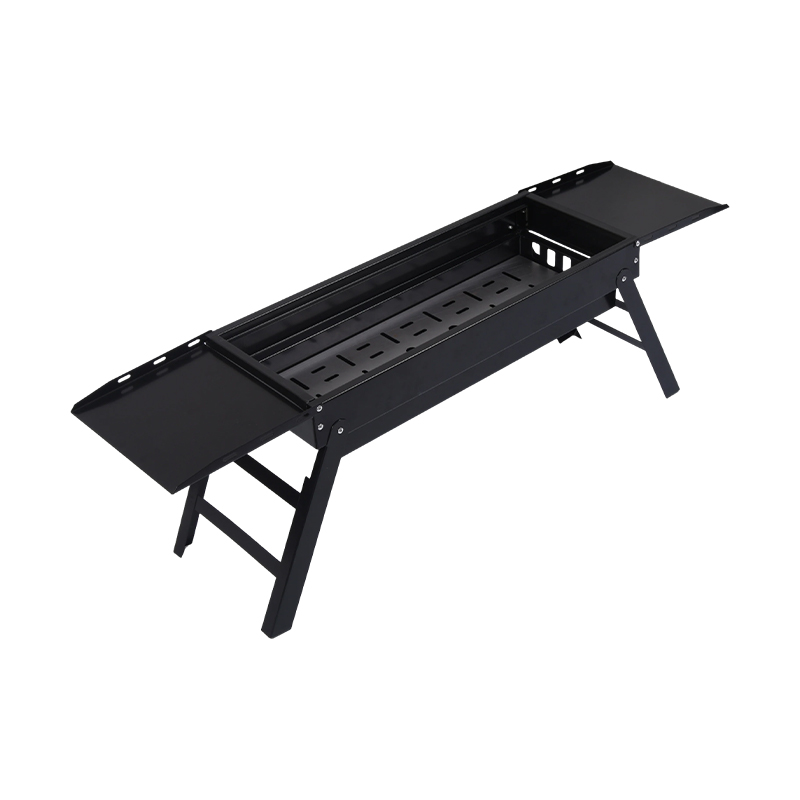
Not every family gathering happens at home. Park picnics, beach days, camping weekends, and tailgate events call for a cooking solution that travels well without sacrificing cooking performance. The portable folding charcoal BBQ grill category has evolved significantly — modern units fold flat for transport, set up in under two minutes, and deliver cooking surface areas of 150–300 square inches sufficient for groups of four to eight.

Key features to evaluate in a portable unit include: the thickness of the steel (thicker steel retains heat better and resists warping over multiple uses), the stability of the folding leg mechanism under load, the quality of the air vent system for temperature regulation, and the practicality of ash disposal after cooking. A well-designed portable charcoal BBQ grill with a sliding ash tray and adjustable air vents provides the same control as a larger stationary unit within a fraction of the footprint.

Cixi Chenfeng Electric Co., Ltd. is a China-based portable folding charcoal BBQ grill supplier offering ODM and OEM customization services for distributors and retailers requiring private-label outdoor cooking products. Their production capabilities support custom sizing, finish specifications, and packaging requirements for wholesale orders.

Portable BBQ Grill Market Share of Total BBQ Sales (%), 2018–2027

0% 10% 20% 30% 40% 2018 2020 2022 2024 2026

Portable BBQ grills have grown from approximately 14% of total BBQ grill unit sales in 2018 to a projected 38% share by 2027, driven by demographic shifts toward apartment living, increased outdoor recreation activity, and the growing influence of social media cooking content that normalizes outdoor cooking outside the backyard. The acceleration between 2019 and 2021 coincides with a period of increased outdoor activity and consumer interest in accessible at-home cooking experiences. For BBQ grill manufacturers and wholesale BBQ grill distributors, this trend signals a structural shift in category demand that warrants expanded portable product range investment rather than treating portable grills as a niche subcategory.

How to Season and Maintain Your BBQ Grill for Longevity

A well-maintained BBQ grill can serve a family for 10–15 years. The two most impactful maintenance practices — seasoning the grates and cleaning after each use — take less than 15 minutes combined and prevent the majority of rust, sticking, and flavor contamination issues that send otherwise functional grills to early retirement.

How to Season a Grill Properly

  1. Clean the grates thoroughly with a wire brush or steel wool before the first use to remove any manufacturing residue or packaging oils.
  2. Apply a thin layer of high-smoke-point oil (flaxseed, canola, or vegetable oil) across all grate surfaces using a folded paper towel held with tongs.
  3. Heat the grill to 400°F–500°F and hold for 30–45 minutes. This polymerizes the oil into a bonded non-stick surface layer.
  4. Allow to cool completely, then apply a second thin coat and repeat the heating cycle once more for best results.
  5. Re-season every 4–6 uses or whenever food begins sticking despite a clean surface — a reliable indicator that the seasoning layer has degraded.

Post-Cook Cleaning Routine

  • Brush grates while still hot — food residue releases easily at temperature and does not require chemical cleaners.
  • Empty ash trays on charcoal grills after each use — accumulated ash retains moisture and accelerates floor corrosion.
  • Wipe down exterior surfaces on stainless steel BBQ grills with a damp microfiber cloth, wiping in the direction of the steel grain to prevent surface scratching.
  • Cover the grill when not in use — a well-fitted cover prevents UV fading on plastic components and dramatically slows surface oxidation on all material types.
  • Perform a full deep clean — including burner tubes, flame tamers, grease trays, and igniters — at least twice per cooking season.

BBQ Grill Buying Guide: Key Features to Evaluate

When shopping for a backyard BBQ grill or evaluating options from a BBQ grill supplier, use this structured checklist to compare options objectively rather than relying on marketing language alone.

Feature What to Look For Red Flags
Cooking Grates Cast iron or 304 SS, min 9mm rod thickness Thin chrome-plated wire (rusts within 1–2 seasons)
Lid Fit Tight seal with minimal smoke gap, built-in thermometer Loose-fitting lid — reduces indirect cooking efficiency by up to 40%
Firebox Gauge 3mm+ steel or heavy cast iron Thin sheet steel that flexes under hand pressure
Ventilation Adjustable top and bottom dampers for precise airflow Fixed vents with no temperature regulation capability
Grease Management Sloped channel directing grease to removable tray Flat floor with no drainage — fire hazard from pooled fat
Warranty Minimum 2 years parts and labor for consumer grills 90-day or parts-only warranties signal low build confidence
Table 2: BBQ grill buying guide — feature checklist and quality indicators.

Frequently Asked Questions About Choosing a BBQ Grill

Below are the most-searched questions from buyers, home cooks, and first-time grill owners evaluating their options.

Q1: What is the best BBQ grill for beginners?

A gas grill with two or three burners and a built-in thermometer is the most forgiving starting point. It eliminates the charcoal lighting learning curve, offers instant heat adjustment, and makes temperature monitoring straightforward. A portable folding charcoal BBQ grill is an excellent second option for beginners who want to develop fire management skills at lower scale.

Q2: Is a gas or charcoal grill better for families?

Gas grills are generally better for regular family use due to faster startup, easier temperature control, and lower maintenance burden. Charcoal delivers superior smoky flavor and higher searing temperatures, making it preferable for dedicated weekend cooks. Many families own both — a fixed gas BBQ grill for weeknight use and a portable charcoal unit for special occasions.

Q3: How often should you clean a BBQ grill?

Grates should be brushed before or after every cook while still hot. A mid-season deep clean — covering burner tubes, flame tamers, and grease trays — is recommended after every 15–20 cooking sessions. At minimum, a thorough inspection and clean should be performed at the start and end of each outdoor cooking season.

Q4: What temperature should a BBQ grill be for cooking?

Direct grilling of burgers, steaks, and chicken pieces typically uses 375°F–450°F (190°C–230°C). Searing steaks benefits from higher temperatures of 450°F–550°F. Low-and-slow barbecue for ribs or brisket uses indirect heat at 225°F–275°F (107°C–135°C) for 4–12 hours depending on cut size.

Q5: Are stainless steel grills better than others?

Stainless steel BBQ grills built from 304-grade steel offer the best long-term weather resistance, easiest cleaning, and most professional appearance. They outperform porcelain-coated steel on durability but require regular wiping to prevent fingerprinting and surface oxidation in coastal environments. Cast iron grates on a stainless body combine the best heat retention with the best corrosion resistance.

Q6: Why is food sticking to my grill?

Sticking occurs when grates are not properly seasoned, not hot enough before food is placed, or not cleaned of residue from prior cooks. Preheat the grill fully (10–15 minutes), brush grates clean, apply a light oil coating to the food surface or grates, and avoid moving food in the first 2–3 minutes — properly seared food releases naturally when ready to turn.

Q7: Can you leave a BBQ grill outside year-round?

A heavy duty BBQ grill made from 304 stainless or quality powder-coated steel can remain outside in most climates with a quality fitted cover. In coastal environments or regions with heavy snowfall, storing the grill in a garage or shed during the off-season extends service life significantly. Plastic side tables and igniter components are the most vulnerable to UV and freeze-thaw damage.

Q8: What size grill do I need for a family of 6?

A primary cooking area of 350–450 square inches handles a family of 6 comfortably, allowing simultaneous cooking of 16–20 burger patties or a full chicken cut into pieces. If you regularly host extended family or neighbourhood gatherings, sizing up to 500–600 square inches provides the flexibility to cook for 10–15 people in a single batch without multiple rounds.

Share:
Contact Us Now
Product
Related Product